Cotswold Lions, Donkey Doors and Painswick’s Hidden Past
I always say you can almost taste the history in the Cotswolds.
The region has been continuously inhabited for at least 6,000 years, and moving through the landscape, the evidence for that is all around you.
Walk along a path, and the familiar bulge of a Neolithic burial mound or ‘tump’ will greet you. Climb to the top of one of its many hills, and chances are you will find yourself walking through the ancient earthworks of an Iron Age hillfort. Wander through its woods, and if you are lucky, you may find a Roman mosaic hidden amongst the trees.
Today, the Cotswolds are designated a National Landscape (formerly an Area of Outstanding Natural Beauty). While the region may lack the dramatic vistas of the Brecon Beacons, the Peak District, or the Yorkshire Dales, it makes up for it with a gently rolling landscape of verdant hills that dip into exquisite, secret valleys. Walking through them feels like you have stepped through a portal to a different age.
It is little wonder Tolkien drew so much inspiration from the region when describing The Shire.
One of the Cotswolds’ most distinctive features is its architecture. Hewn from the Jurassic limestone that underpins the entire area, it seems to blossom organically from the green surroundings—as if sung into existence rather than quarried from the ground and built by human hands.
They say you can tell where you are in the region by the hue of the stone, from the honey and burnt sienna tones of the north to the cool silver-greys of the south.
The Cotswolds truly is the quintessence of the English countryside.
While those earlier epochs certainly helped shape the region, its modern form owes most to one in particular.
The Wealth Engine
There was never gold in the Cotswolds hills, but there was a ‘golden fleece’.
By the 13th century wool had become the cornerstone of medieval England’s economy. Something about our cool and damp land lent itself to producing wool superior to anything on the continent. Raw fleece from the Welsh Marches, East Anglia and the Yorkshire Dales were all in high demand.
But it was the Cotswolds that produced a wool that surpassed them all.
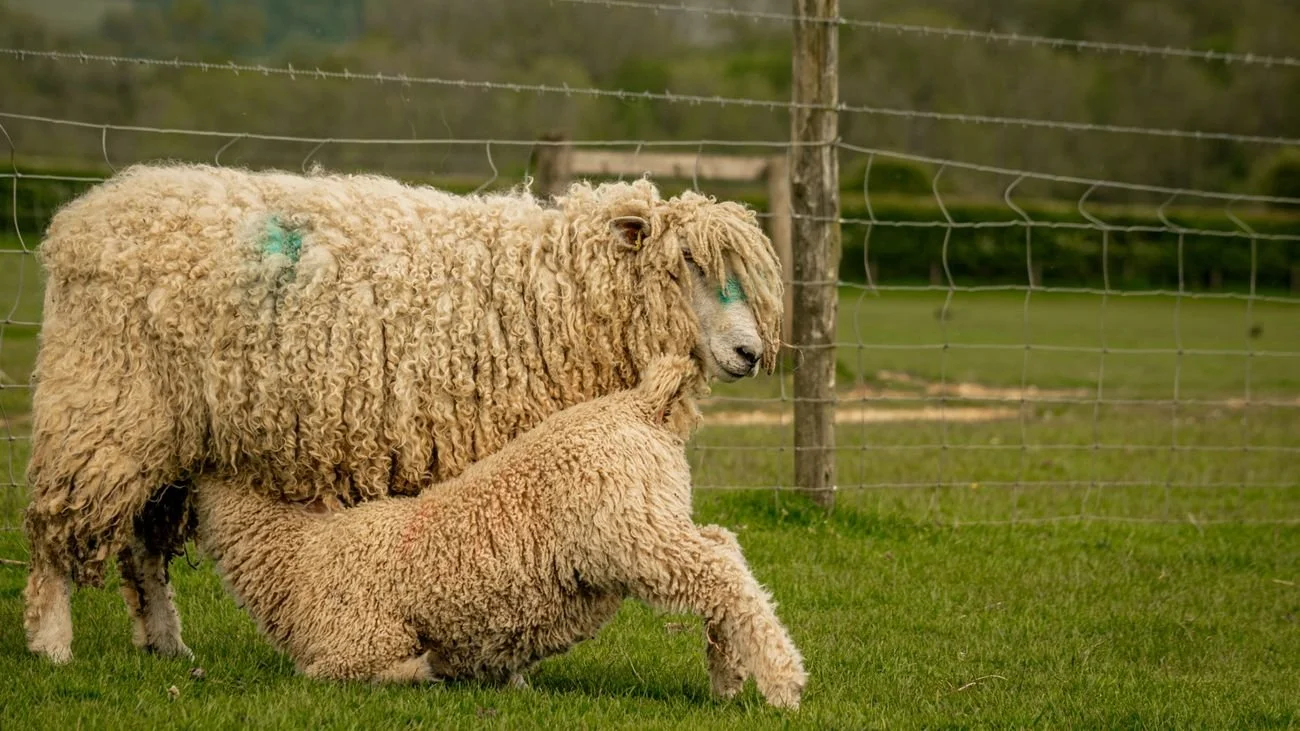
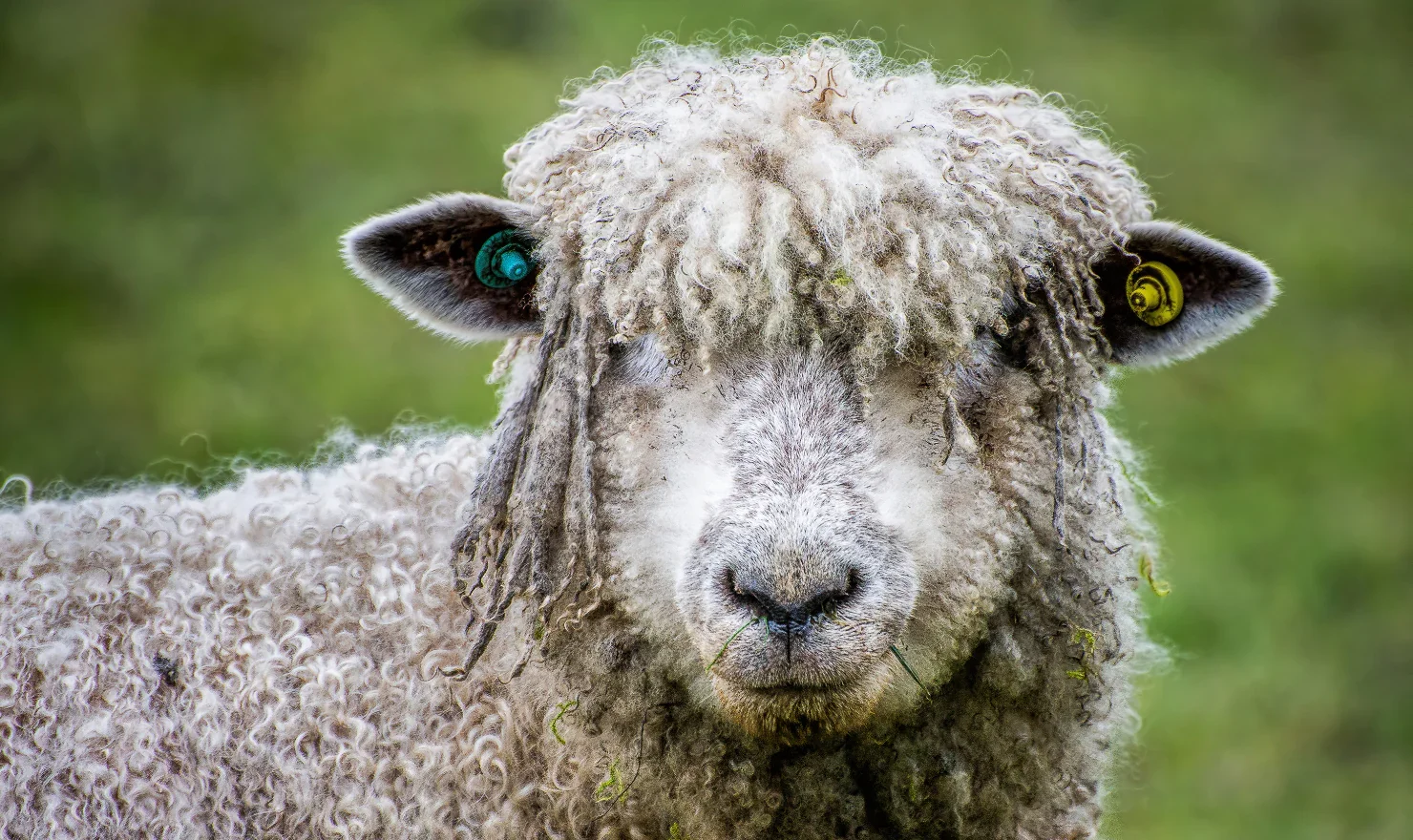
There the local breed was the doughty Cotswold Lion, a name earned by the thick, honey-hued coats and long curly mane the sheep handsomely sported. These sheep thrived on the pristine Jurassic limestone grasslands that in the spring and summer burst forth with a tapestry of wildflowers and colours, with unique species of flora so rare now they are protected by the Wildlife and Countryside Act.
As a wine professional, I recognise terroir when I see it.
That combination of soil, sheep and Cotswold climate created a synergy that saw merchants from as far afield as Flanders and Florence crowd the Cotswold market towns. As the saying went, ‘in Europe the best wool is English and in England the best wool is Cotswold’.
This was the golden fleece, named both for its colour and for the wealth that it poured into the region.
No Greek myth, it was the Romans who are believed to have introduced the breed a thousand years before. It was a transformative legacy that over the next three hundred years would irrevocably change the fortune and landscape of the Cotswolds.
The Churches that Wool Built
The limestone that nurtured the grasslands and gave succour to its grazing lions was about to play another significant role in the region’s fortunes. Barely a hill or wood within the Cotswolds border is without the pockmarks of a stone quarry, and beneath others are miles of empty, silent tunnels.
These provided the stone that built the Cotswolds: its cottages, hamlets, villages and towns, as well as the signature drystone walls that criss-cross the region.
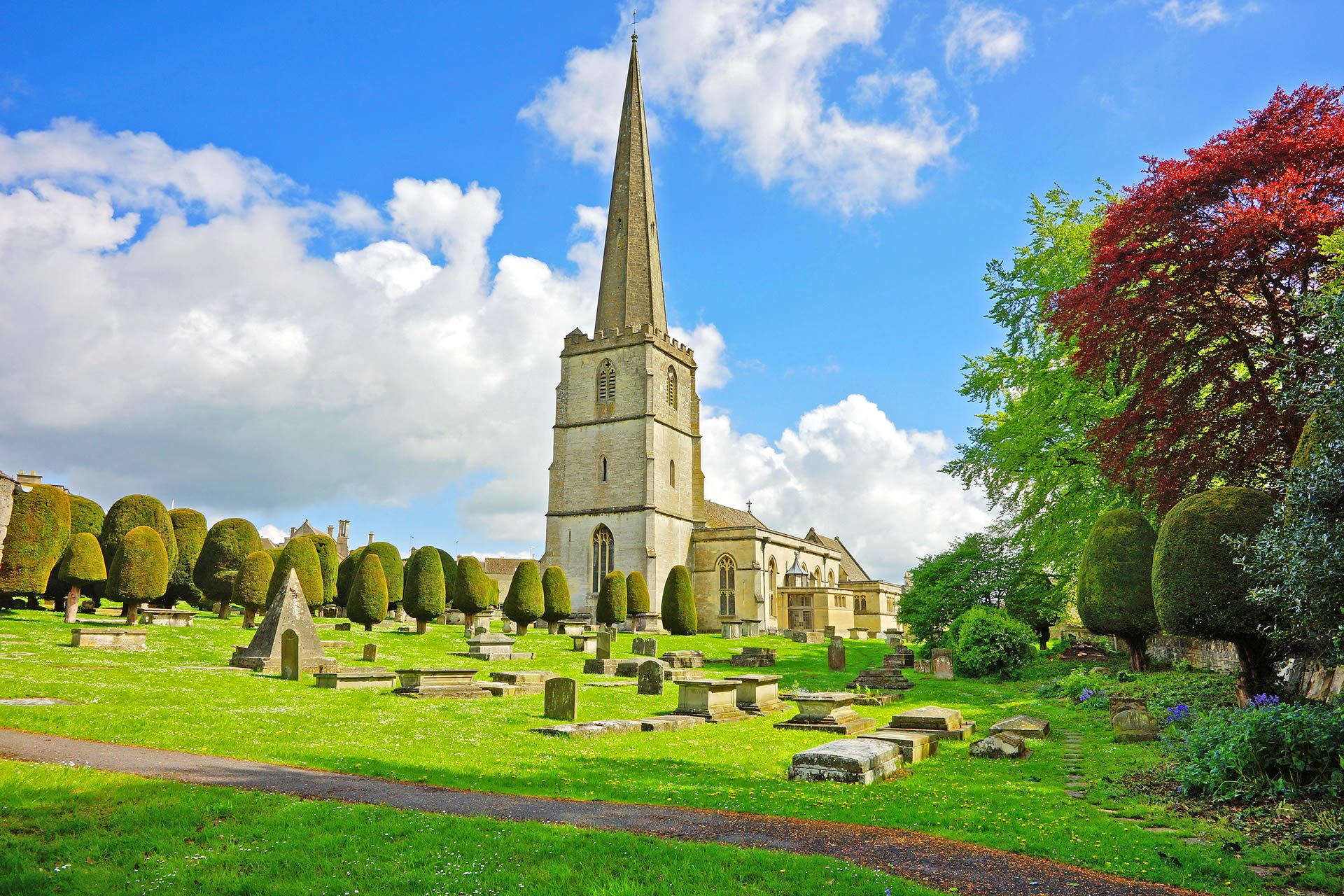
With ledgers bulging, an increasingly wealthy merchant class looked to invest their fortune back into the region. They built the cathedral-style places of worship that still dot the landscape today—magnificent structures dubbed ‘wool churches’, to show deference to their god (and hoping for passage to a comfortable afterlife) and providing a focal point for communities.
Villages grew around them and became the hubs of the wool trade, where packhorses, donkeys and carts would arrive daily from the farms and fields with their golden burden.
All Hail the Queen
It was in these villages that the Cotswold wool trade underwent its greatest transformation. With competition from Spain’s merino wool and heavy export duties on raw fleece, merchants increasingly found greater profit in producing finished cloth.
The crown's ambitions coincided with unrest in Flanders. In 1323 a peasant revolt swept through the Low Countries, drawing many skilled weavers into the conflict. When the rebellion was crushed, the survivors fled or were expelled. England offered them asylum—and with them came generations of weaving expertise.
While they were certainly able to kick-start the industry in urban centres on the back of charters granted by the crown, the raw wool was already in rural areas and here instead a ‘putting-out system’ evolved, with spinning and weaving done by labourers in their own home, in return for piecework payment by the merchants.
The clues for this shift lie in the very stones of the villages, and few towns demonstrate this as perfectly as Painswick.
Known as the Queen of the Cotswolds, the town is a living museum of this period of the wool trade. On the main streets are the large, imposing manors of the ‘clothiers’ or merchants, while in the narrow streets that fall away to the bottom of the valley are the smaller weaver’s cottages, with an important distinction.
Weaving required light and lots of it, to manage threading thousands of warp yarns and correcting any breakages and pattern errors on the loom. The top floor of cottages were built as ‘loom rooms’ with distinctive continuous stone-mullioned windows across their entirety, facing south to catch the sun. Some even have windows in the gables.
Below them, on the valley floor were the ‘fulling’ mills themselves. Here the handwoven cloth from the cottages above were beaten in the water from Painswick Stream and fuller’s earth to cleanse and thicken the nascent fabrics. The process produced the sought-after Cotswold Broadcloth which would then be dyed.
The trade was entirely reliant on packhorses and donkeys to deliver the raw fleece to merchants then weavers, and then in turn the unfinished or ‘web’ cloth to the mills. The architecture reflects this, with wide coach doors and smaller donkey doors where the beasts of burden could deliver directly into the courtyards and workshops behind the houses. No need to move bulky bolts of wool through the household.
The Lost Doors of Painswick
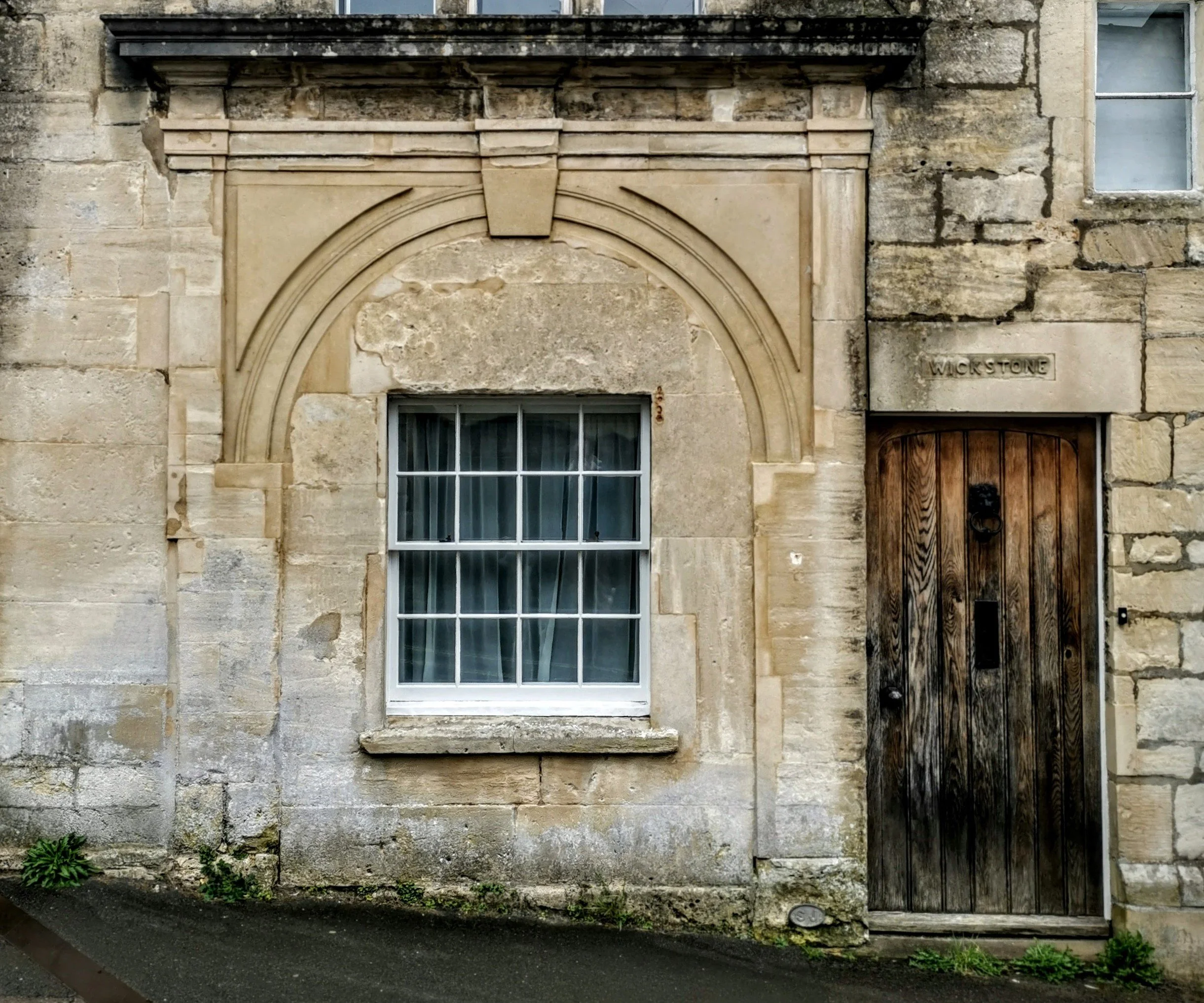
As an accidental historian I do not go to places with a story I want to explore. I go in blind and allow the story to find me. And it was here that the story did just that, hidden in the beautifully carved stone arch in the wall above.
It had first caught my eye on arrival, but it was not until right at the end of the walk, just as I was about to return to the car, that I felt compelled to dart up the street to get another, closer look. I felt so sure there must have been a door there, despite how well disguised it looked.
I was standing on Bisley Street. In the past it was the principal thoroughfare of Painswick, carrying travellers on the trade route between Gloucester and Bisley. That, like the buildings that lined it, had changed in the intervening years.
The wool is long gone, as are the packhorses and donkeys that carried it. The oversized doors necessary to admit them are now unused. Some, like this archway, have simply been erased.
It was once the grand entrance into the courtyard and stables of the appropriately named Fleece Inn that had stood there since the 17th century before closing in 1905. Once closed the inn was divided into three private residences: Wickstone, Fleece and Little Fleece, and at some point the superfluous stable door was infilled so sympathetically by the stonemasons it almost escapes notice.
Beyond there will be living rooms and kitchens and dining tables, enclosed domestic spaces where before there were cobbles, straw and open sky.
A little further down on the the same street there are two of the remaing donkey doors in the village, whose passageways open directly to the rear of the house. Others in the village have been absorbed into the houses.
Painswick’s steep streets no longer echo to the steady staccato of iron-shod hooves, the doors are now shuttered and silent. The mighty Fleece Inn, once the hub of the village’s trade, is just a memory.
But still these enduring symbols of the village’s past remain, easily missed as visitors dash to admire the 99 yew trees in the churchyard, or vie for a coffee and creamcake in the cafe.
Old secrets forever etched into the stone, just waiting for someone to read them.
Written by A James Cole
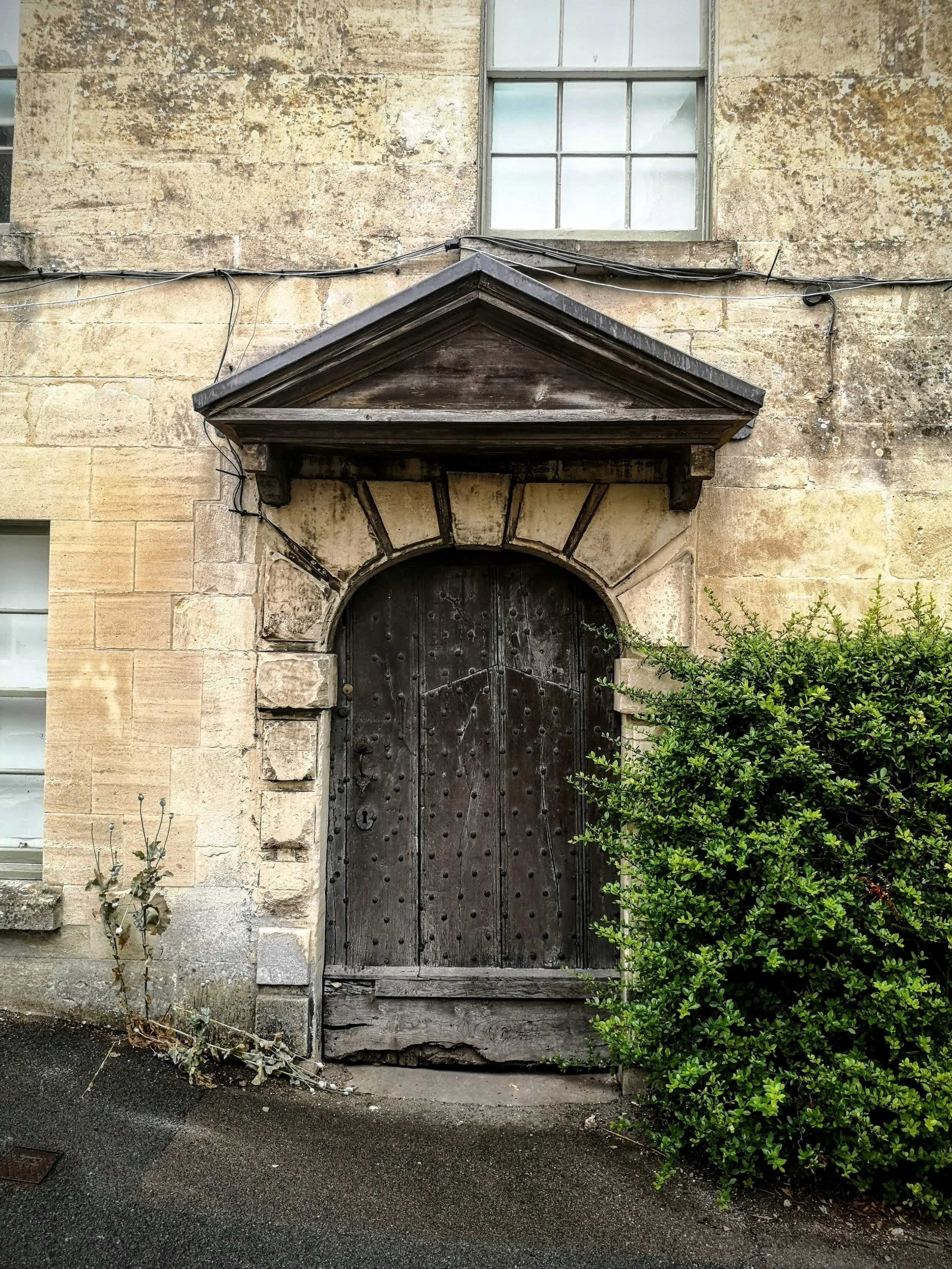
On of the donkey doors on Bisley Street today
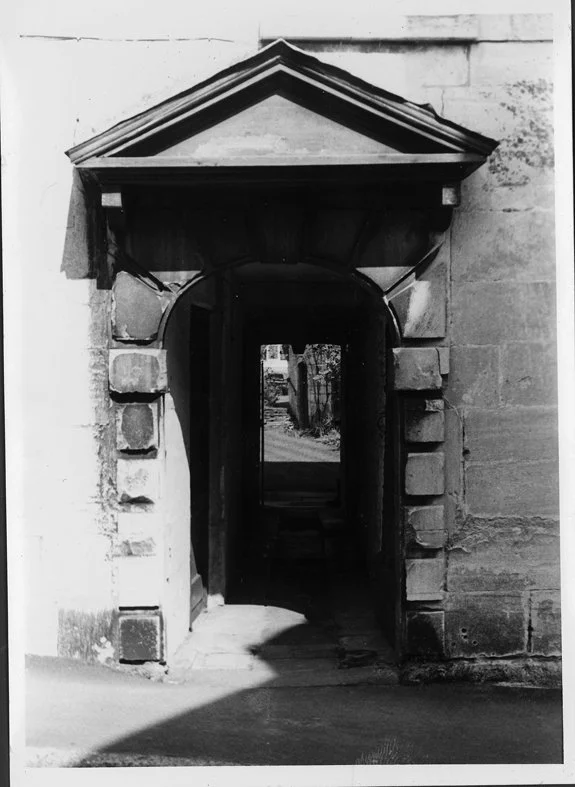
The same door in yesteryear, showing the passgeway to the rear of the house
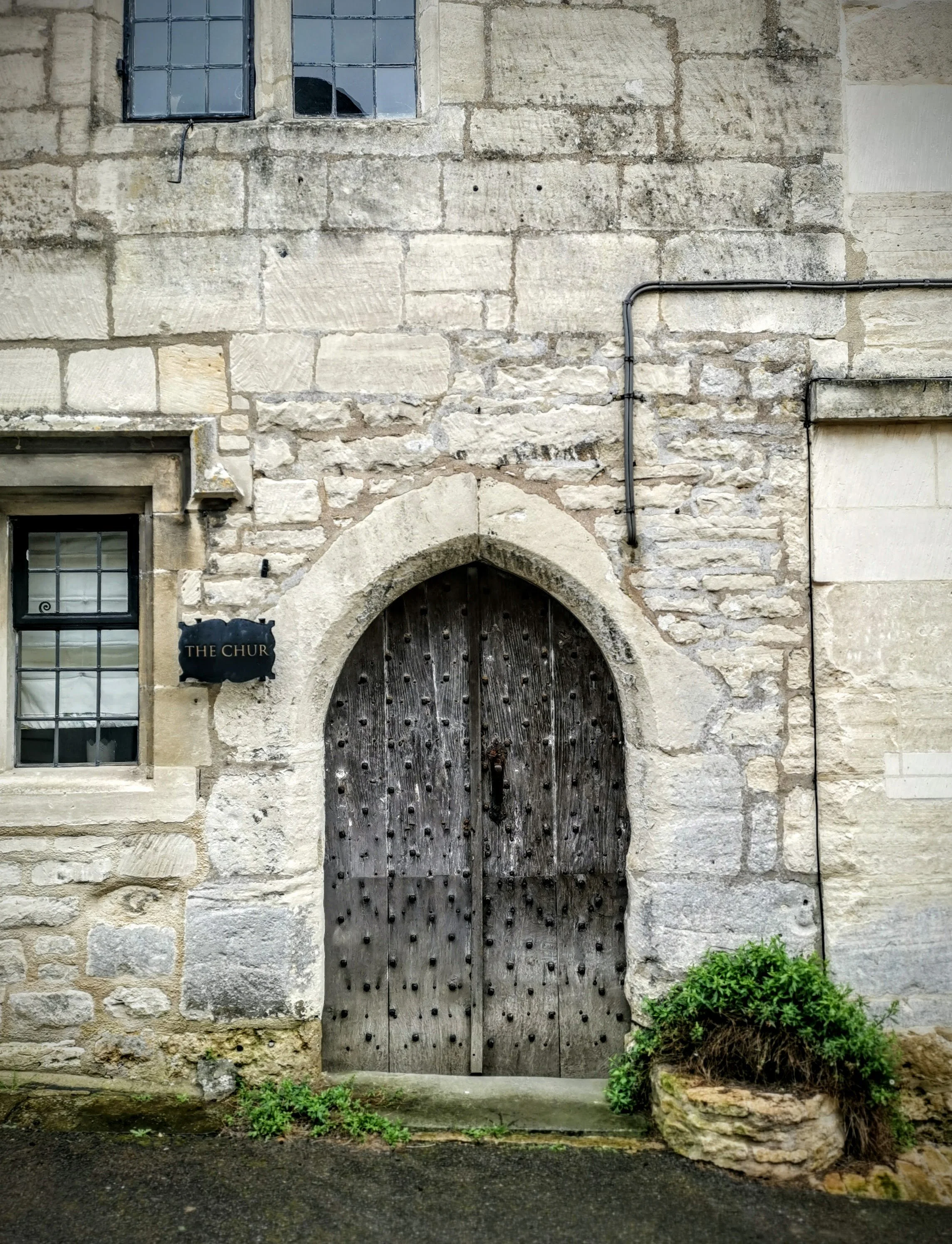
The doors were robust, studded with iron and made of heavy oak
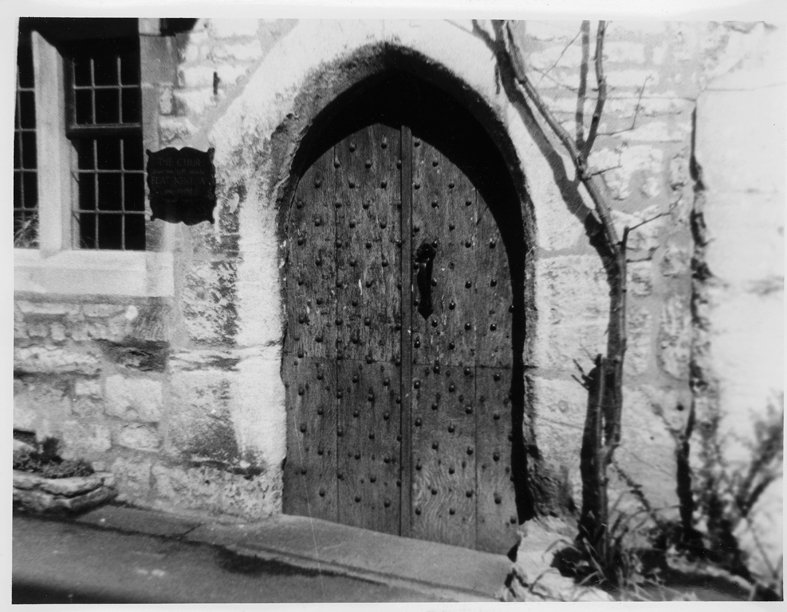
They need to be strong to withstand the constant passage of the donkeys and their heavy load
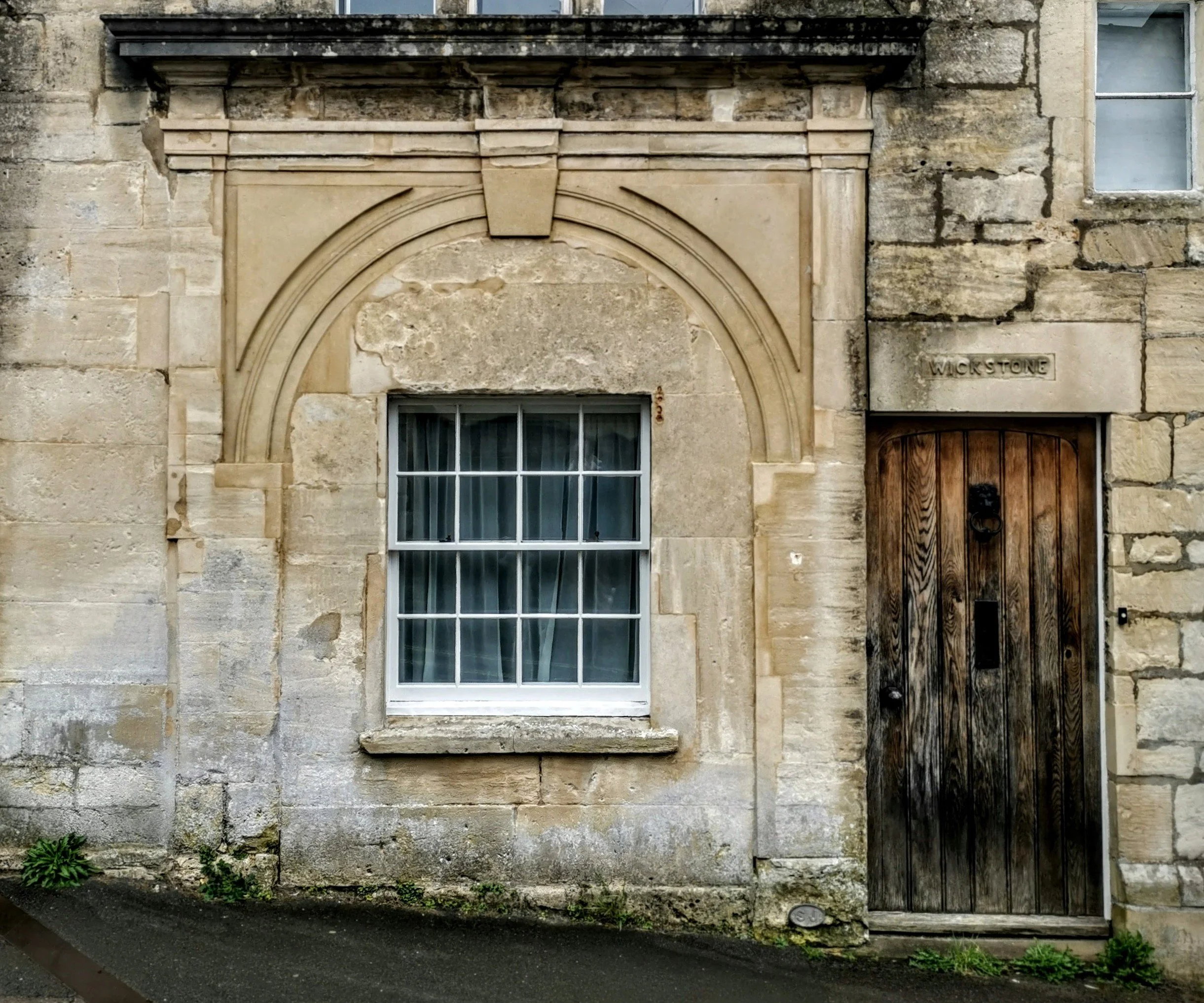
This old doorway is masterfully disguised
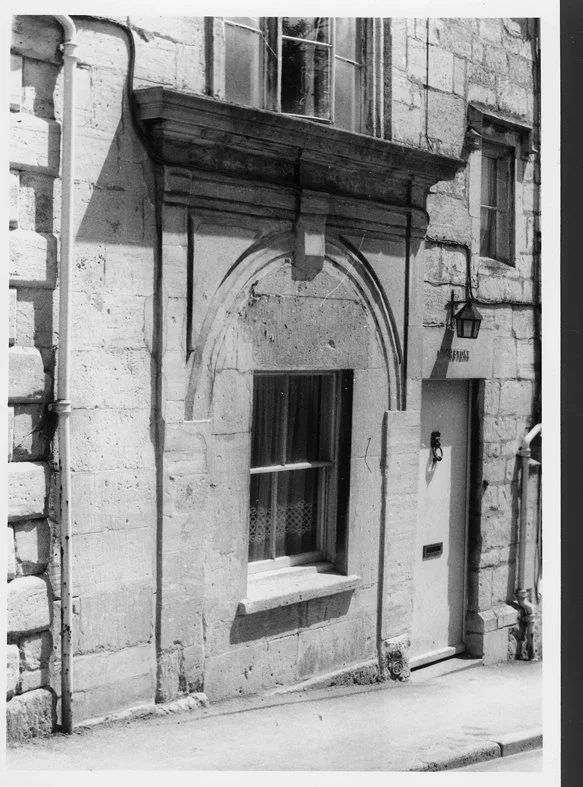
But in spite of that it still tells the story of the village's past
Further Reading