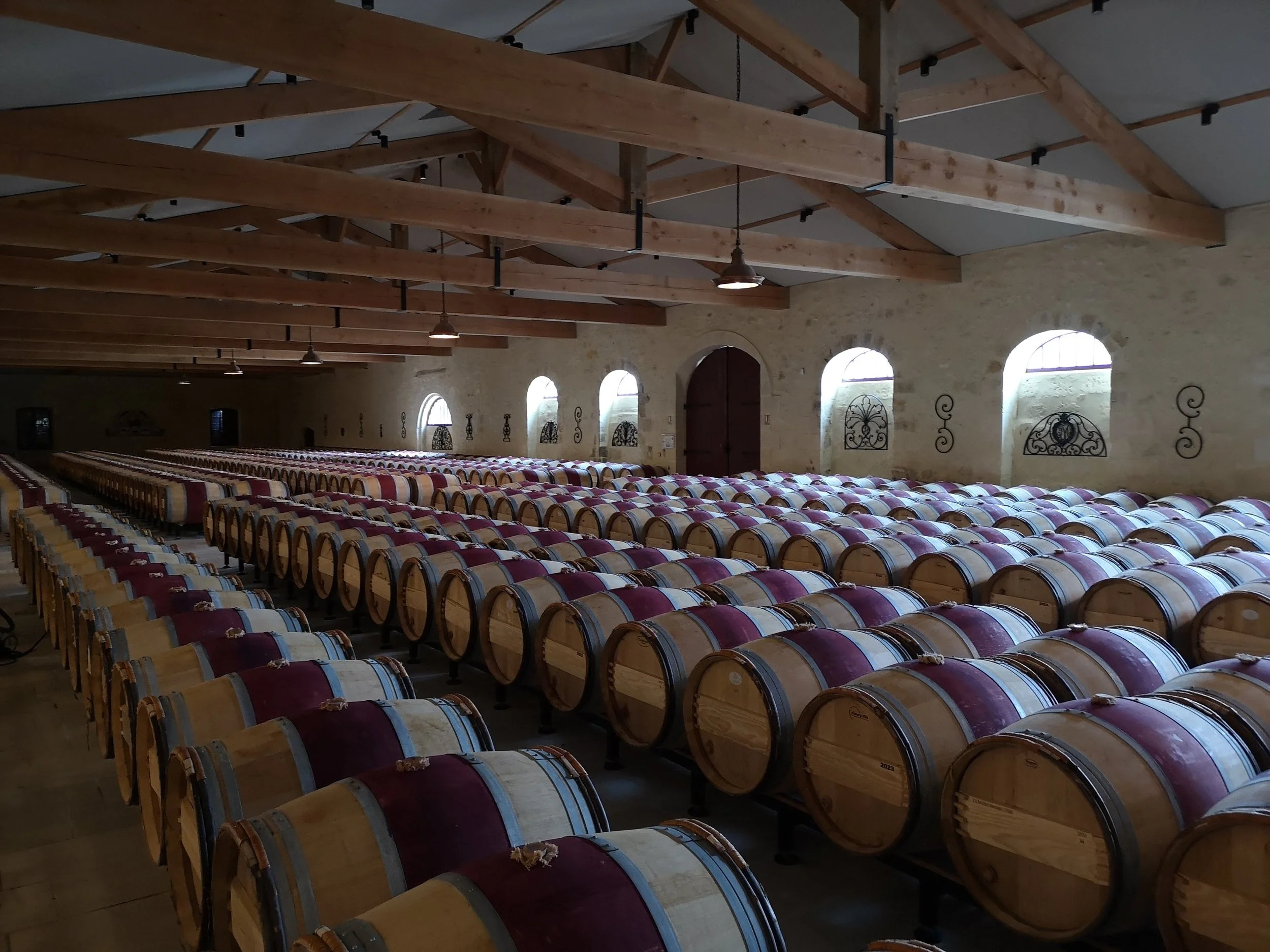
A James Cole
Freelance Copywriter • Brand Storyteller • Creative Content Producer •Photographer of Doors
To me good copy isn't about filling space or buzzwords masquerading as insight. It’s about finding the human stories inside a brand, and the passions that drive it.
My writing does exactly that, seeking the right focus that makes people stop reading and start caring, using sensory-rich, evocative language that brings the experience to life.
Over the years I've written about wine, history, architecture and culture, built an online community of more than 11,000 members around photographing overlooked spaces, and developed a reputation for making complex subjects engaging and accessible.
By combining more than a decade of high-value account management in the luxury wine industry with a lifetime passion for history, architecture, and visual storytelling, I give interesting brands a unique, resonant voice to really connect with their customers.
Areas of Expertise
Editorial & Feature Writing
Articles on wine, food, travel, history, architecture and culture.
Brand Storytelling
Helping businesses communicate their values and identity with clarity and personality.
Website Copy
Engaging copy tailored to your product and audience.
Email Marketing
Campaigns, newsletters and customer communications.
Product & Technical Writing
Clear and informative copy that makes complex subjects accessible.
If you'd like to discuss a project, I'd be delighted to hear from you.
“Clearly the 1855 Classification is no longer accurate in both the quality of the wines nor the prices they reach, but at the same time it is not wholly irrelevant. It is Black Rod hammering on the closed door of the Commons to call Parliament to hear the King’s speech. It is Bordeaux’s grade 1 listed building and may not and should not be demolished, extended or altered in any way. The soils and climate create the terroir of the Médoc, but the 1855 Classification is the intangible soul of the region. With it they captured lightning in a bottle, propelling it to the forefront of fine wine all those years ago and sustaining it ever since, holding a fascination that can border on the tribal with customers.”
On the 1855 Classification of Bordeaux
“On its Atlantic side, sandwiched between the pine forests that run along the west coast and the estuary, lies the Médoc. It is an unassuming landscape: an 80km long strip of low-lying marshland reclaimed from the estuary in the 17th century. It forms a mosaic of gently undulating plateaux scored through by streams and shallow valleys. Here the grape is lord of all it surveys, a virtual sea of vineyards whose most remarkable feature are the Châteaux that rear up memorably into its skyline, each a hallowed cathedral to the vine.”
On the Médoc
“And the Zeppelin moniker? This is an old wine, vinified by the estate since the 1920s and in those early days it was proudly served on board the transatlantic flights of luxurious airships “Graf Zeppelin” and “Hindenburg”. This legacy is preserved on the label, a beautiful, evocative design commissioned from Bauhaus designer Hans Schlößer in the 1930s and still gloriously in use today.
And the art on the label is reflected by the bottle’s contents. Green gold in the glass there is a joyous aspect to the wine’s compelling perfume, crammed with spring blossom, rich orchard fruit, tangy citrus characters, fresh herbs and a distinct slate minerality. The palate is shot through with energy, a deluge of vibrant fresh lemon, lime and green apple that is just beautifully pure and incredibly fresh, layered with spicey hints of white pepper and coriander seed, and a moreish mineral texture that leads you into a long, cleansing finish. Drink now and over 5-8 years and serve with caprese salad, seafood, green olives, creamy cheeses and charcuterie.”
On Max Ferd Richter Mülheimer Sonnenlay ‘Zeppelin’ Riesling 2022
“There has always been something magical about the vineyards of Chile. Nestled halfway between sea and mountain in the river-fed valleys that dot its long coastland they provide one of the most pristine climates for viticulture. Long sunshine hours and warm continental weather clash with the sea air chilled by the Humbolt current, tempering the heat with cool nights and banks of morning fog that roll across the vines. This slows the ripening and makes for fruit of exceptional vibrancy that, when crafted by the right hands, delivers superb wine.”
On Polkura Syrah
“The commercial history of English sparkling wine began in 1988, when Sandy and Stuart Moss planted their first vineyard near Pulborough in West Sussex and called it Nyetimber. What was different about this vineyard was the grape varieties: other attempts to produce wine on our Island had focused on lesser German varieties like Muller-Thurgau and Reichensteiner. But the Mosses had grander plans than making insipid still wines. They planted their vineyard with a mixture of Chardonnay, Pinot Noir and Pinot Meunier, the noble grapes of the Champagne region, with an express intention to dedicate production to Champagne-style sparkling wines.
Their vision sparked a revolution. England’s northerly latitude and cool maritime climate is able to produce ideal vin clairs, the austere base wines used for secondary fermentation and addition of bubbles in Champagne. Fast forward to today and Nyetimber have been joined by a host of sparkling wines producers whose wines have grabbed the attention of the world and won plenty of awards along the way. It is no accident that interlopers from the Champagne region are eyeing our shores with envy and buying up new vineyards as we speak.”
On English sparkling wine
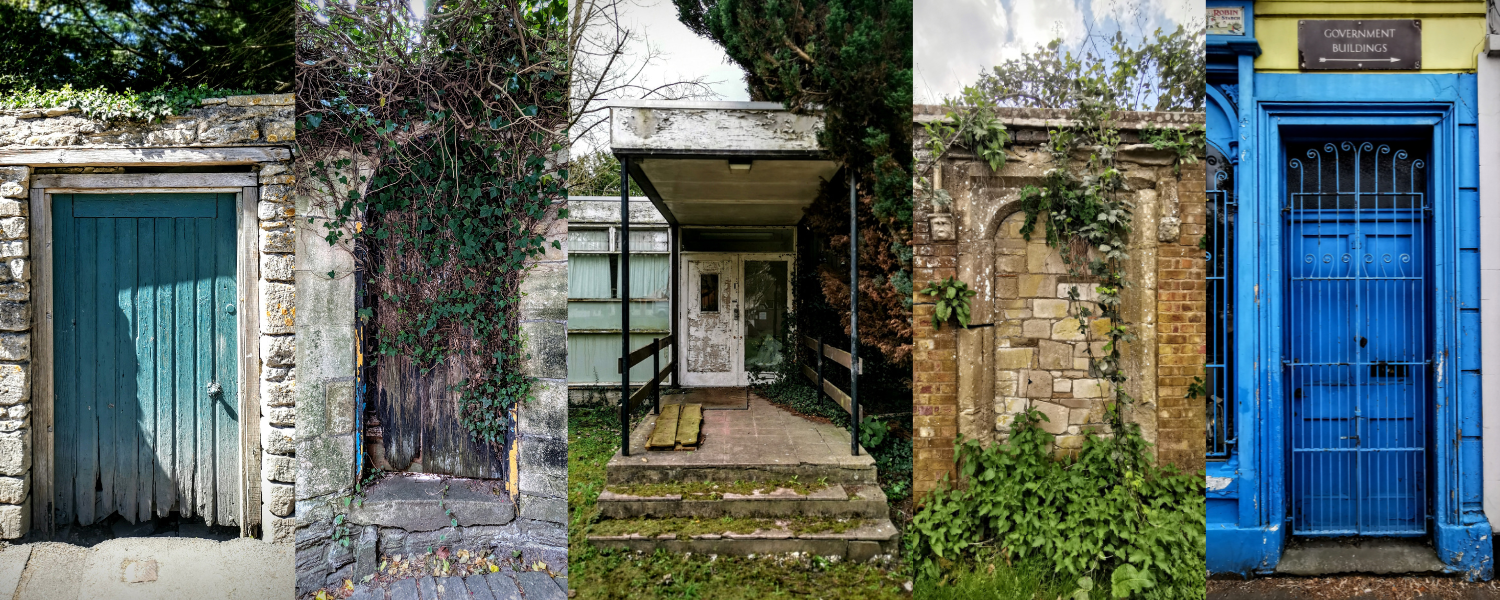
Doors have always been rich with symbolism. There is a natural dichotomy to them, at once an entrance when open and a barrier when shut. They are a liminal threshold, the embodiment of betwixt and between: moving from one reality to another, one state of being to a different one. They are an unoccupiable space in between, a portal that exists only for people to pass through.
A door not used anymore is a door that has changed its function, space and form from what it was originally intended. Now sealed, blocked, bricked up, locked up, painted over, overgrown and forgotten, rather than a passageway it is itself part of the wall.
A door-no-more. An un-door.
On doors not used anymore
There is a magic in Otago that cannot be denied. It lies on the same parallel in the southern hemisphere as Burgundy does in the north, the 45th, which perhaps begins to explain why Pinot Noir made a home here so readily. The air is clean, the sky seems to go on forever, the rivers are pure and a deep azzuri blue. Its summers days are sunny and hot and the nights cool, its winters cold and its mountains snow-covered. In Aotearoa’s narrow landmass the influence of the sea is never far away except for Central Otago, making it the country’s sole continental climate. It is protected from the predations of the weather systems that build on the Southern Ocean and strike at New Zealand’s south and west coasts by the Southern Alps that stretch along the west. Beyond them on the strip of land between sea and mountain the average rainfall is over 7 metres and is home to a temperate rainforest. In Central Otago it can range from as low as 300 millimetres but never more than 600, and it is classified as desert.
On Central Otago
Doors Not Used Anymore
To read about it in greater detail please go here
This project began several years ago as a way of expressing my fascination with the abandoned buildings and hidden spaces around us. I lacked both the courage and athletic ability required to be an ‘urban explorer’ so instead I looked for these doors as accessible visual clues. It became apparent there was much more to them; scars of a building’s past and holders of forgotten stories, signifiers of evolution and adaption to shifting paradigms of use and societal change.
The project may be several years old but my subreddit is not. I created it in September 2025 but it was in January of this year I fully focussed on building it. Since then it has shown steady growth and found a receptive audience. Currently subscribers stand at well over 11,000 with around 500 contributions a week from all over the world. I am the sole moderator and maintain growth by carefully posting doors to other complimentary subreddits.
The community allows me to delve more into ‘accidental history’ and urban archeology, with architecture experts and locals with offering incredible insights to the stories behind the doors.
Read: Michelin to Introduce a Guide to Wineries
Read: Investigation to the Unused Doors of Hereford Cathredral
Read: Wine Icons: Max Ferd Richter Mülheimer Sonnenlay ‘Zeppelin’ Riesling
Let me tell your story
If you're looking for compelling and eloquent website copy, editorial writing or help telling the story behind your business, I'd love to hear about your project. Whether you're an independent business, a winery, a heritage organisation or something entirely different, let's talk.