Kings of a Wild Frontier
English and Welsh wine was once a novelty; now it is big business and a rare bright spot amid the prevailing gloom of the wine industry. With the excellence of its sparkling wines, it reached a critical mass, replacing the sniggers with awards, investment and international acclaim. Now its still wines are coming to the fore, as ambitious winemakers look beyond the chalk soils of the south-east towards new frontiers — and wines that are uniquely us.
Grapes are fussy buggers. At least those destined to be made into wine are. They demand rather precise amounts of sun, specific soil types and a narrow temperature range to flourish. Small shifts in any of these can profoundly affect the productivity and flavour of the fruit.
They also like to suffer. Plant the vines in rich soils, the kind you might expect to nurture a valuable crop to ripeness, and they will become indolent, producing more leaves than fruit as they simply enjoy their luxurious surrounds.
Instead, they need to feel threatened. Harsh, well-drained and stony soils stress the vine, encouraging root systems that delve deep in search of water and nutrients. Instead of luxuriant canopies, the vine puts its resources into dense bunches of small berries and the seeds they carry.
These sacred soils are celebrated, often immortalised in estate names like Ducru-Beaucaillou (beau caillou means ‘beautiful pebbles’), Domaine de Terres Blanches (‘white earth’ ) and Chapoutier’s Schieferkopf wines (‘slate head’).
Some are as famous as the unique wines they produce, like the galets roulés of Châteauneuf-du-Pape, the Kimmeridgian clay of Chablis and the ‘terra rosa’ of Coonawarra.
So where are England’s sacred soils? Traditionally our scepter’d isle sits on the northern limits of grape growing. Its cooler climate proved adept at producing the austere base wines or ‘vins clairs’ that sparkling wines are made from through secondary fermentation. They have slowly been garnering a reputation for excellence over decades, with Champagne houses taking an interest and investing in vineyards in our green and pleasant land.
But that is only the beginning, not an end.
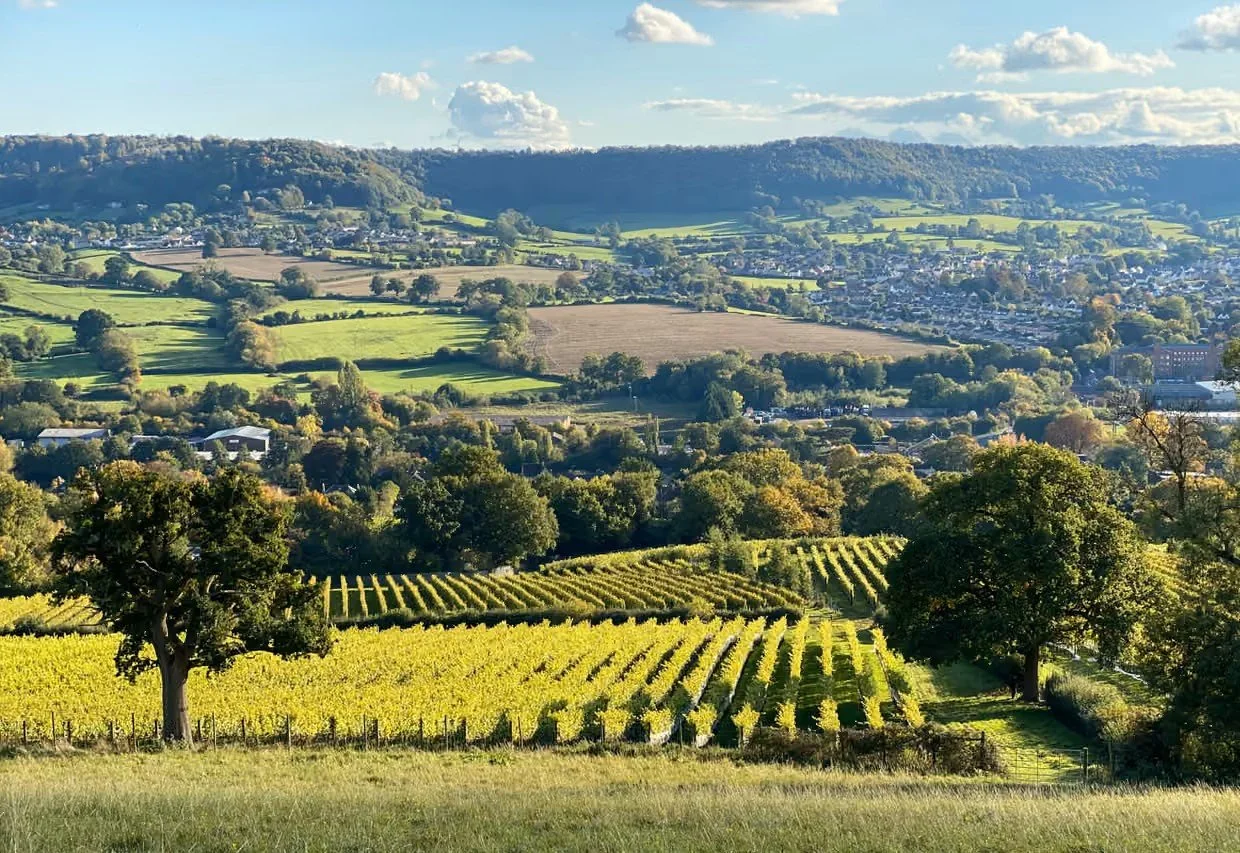
Vineyard on Doverow Hill near Stroud in the Cotswolds
British still wine is an altogether more complicated affair. Perhaps it shouldn’t be; it was the Romans who, along with baths, incredibly straight roads and planned urban centres, first brought vines to these shores over 2000 years ago.
And the vines didn’t disappear when the Romans did. When they went they also left behind their religion, and its religious orders continued to grow vines and make wine for daily masses and sacraments. In the Domesday Book of 1086 40 vineyards were named, but from then on grape-growing on these isles had mixed fortunes. Henry II ruled both England and Aquitaine, the region of France around Bordeaux, so the English were able to import French wine easily, to the detriment of the domestic product. The Black Death of the 1300s decimated rural populations so more essential crops were prioritised.
Still grape-growing sputtered on, surviving the Dissolution of the Monasteries and a general cooling of the climate, but its final death knell sounded with the commencement of the Great War. Crops were needed for sustenance rather than frolicking and so commercial viticulture in Britain finally faded into obscurity after 2000 years of tradition, and with it lost generations of knowledge.
But the thing is about the British is we really, really like wine.
Initially it was resuscitated as a sort of cottage industry, with enthusiastic amateurs making wine in their garages. By the 1960s there were several small commercial vineyards planted and that trend has mostly been upwards ever since.
It wasn’t until the turn of the century that a maturing British wine industry finally emerged, with its fizz impressively shouldering aside European heavyweights, including Champagne, to grab the world’s attention.
But I am not here to talk about sparkling wine (although I will, briefly).
Production of proper sparkling wine and still wine are fundamentally very different. The northern enclave of Champagne, about parallel with Paris, is significantly cooler than the rest of France’s growing regions. In fact its annual average temperature is a mere 11°C, only a degree more than what is considered the base temperature for growing vines.
But when making sparkling wines, this is a positive advantage. The climate that makes ripe grapes for still wine a significant challenge instead delivers something else: the French call them vins clairs, the base wines for Champagne, low in sugar and alcohol but high in acidity.
If that does not sound appealing you would be correct, and I speak from experience. I was once invited to the annual vin clair tasting at Bollinger. After tasting four or five I found myself naturally gravitating towards the big tray of gougère at one side of the room (and also the bottles of the rare La Côte aux Enfants Pinot Noir they make).
The simple reason is vins clairs are not nice, with all due respect to Bollinger! They are austere, tart, with thin fruit and sharp finishes. They are a fascinating experience to taste, but not one that is necessary, or particularly enjoyable to repeat.
The entirety of England’s south lies to the north of Champagne, so logic dictates that we would exploit the similar conditions to make world-class sparkling wine, and it has been a roaring success. Our production of still wine has been much more problematic.
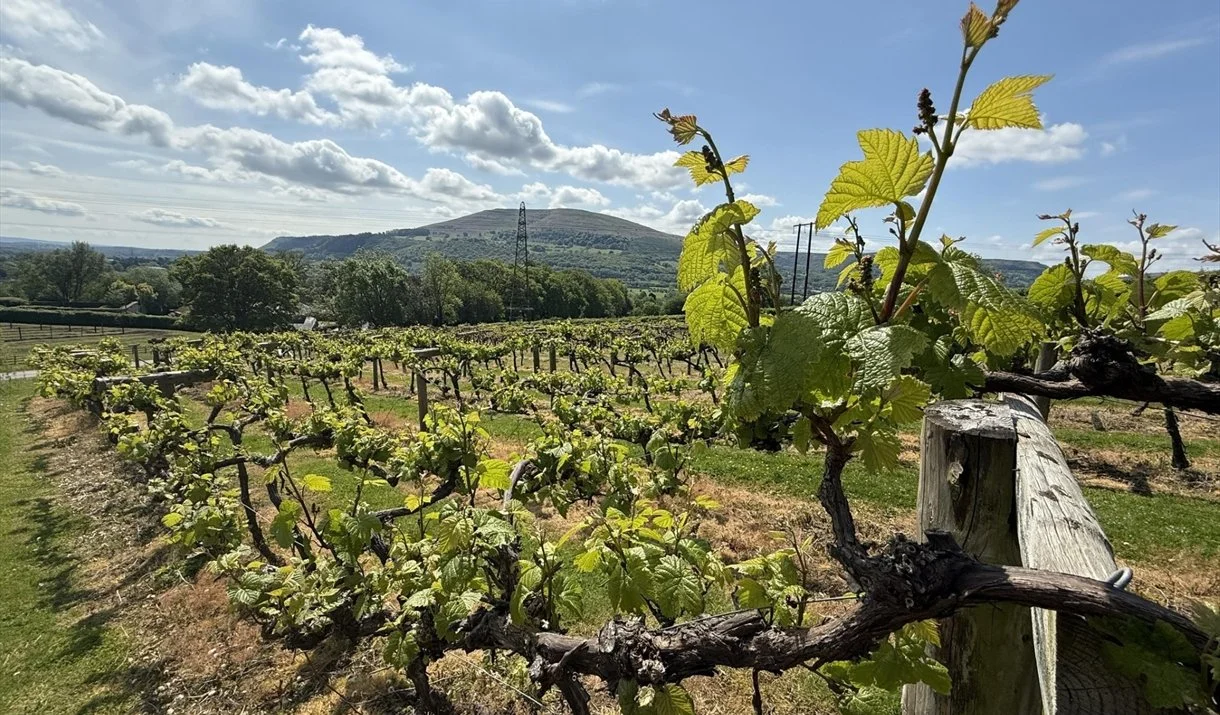
Vines on the lower slopes of Sugar Loaf Mountain, Monmouthshire
Early attempts were based on German wines, but unfortunately the cues came from the very worst ones, the little bottles of horrors that lurk in big brown containers on the bottom shelf in forgotten corners of wine shops. Labels sporting names like Liebfraumilch and Hock, boasting both the alcoholic content and sugar levels of a Babycham.
Müller-Thurgau. For those that know those two words should be enough to send a shiver up the spine. It was one of those early varietals we turned to, clones and hybrids that were fast-growing and early ripening, as if those were the only qualities required to produce still wines in our cool climate. Its just they forgot another: flavour.
There were others, like Bacchus, Seyval Blanc and Reichensteiner, whose names you will still find on plenty of bottles today, chosen as versatile workhorses but at least more aromatically complex and characterful than Müller-Thurgau.
This was viticulture geared towards survival, not expression. Finding varieties that, at harvest, could actually be vinified into something passable as wine. It could have pleasant results, but it was still an exercise in trial, error and luck.
But then, that is what pioneering wine production is. When the European diaspora arrived in the New World armed with vine cuttings from the Old, they could not know that Tannat, an obscure variety from the southwest of France, would become the signature grape of Uruguay. Or that Malbec, a minor variety used in Bordeaux blends, would come to dominate the high plains of Mendoza. The first vines planted by Montana in the river valleys of Marlborough were not Sauvignon Blanc, but Müller-Thurgau and Cabernet Sauvignon. It wasn't until three years later, in 1976, that they trialled Sauvignon Blanc.
I shouldn't need to tell you how that turned out.
And like the rest of the world, those early experiments have born fruit, both literally and figuratively. With Bacchus British vignerons finally found a variety to call their own. Its plantings in its country of origin, Germany, have almost completely died out but it remains the most widely planted grape in the UK. A strange brew of Müller-Thurgau, Silvaner and Riesling it is frost and mildew resistant, making it a boon for growers.
But what they also found was that the grape developed really interesting flavour in British vineyards: elderflower, nettles, lime, leading it to be widely dubbed the British Sauvignon Blanc. Finally, we had a grape that went past simple survival and into a more unique expression of place. Its seminal moment came in 2017, when Winbirri's 2015 Bacchus from Norfolk was named the world's best value white single-varietal wine at the Decanter World Wine Awards. The variety gave the fledgling industry a champion, and we finally had clues on how to unpick the locks to our terroir.
But it was only a small, tentative turn of the key.
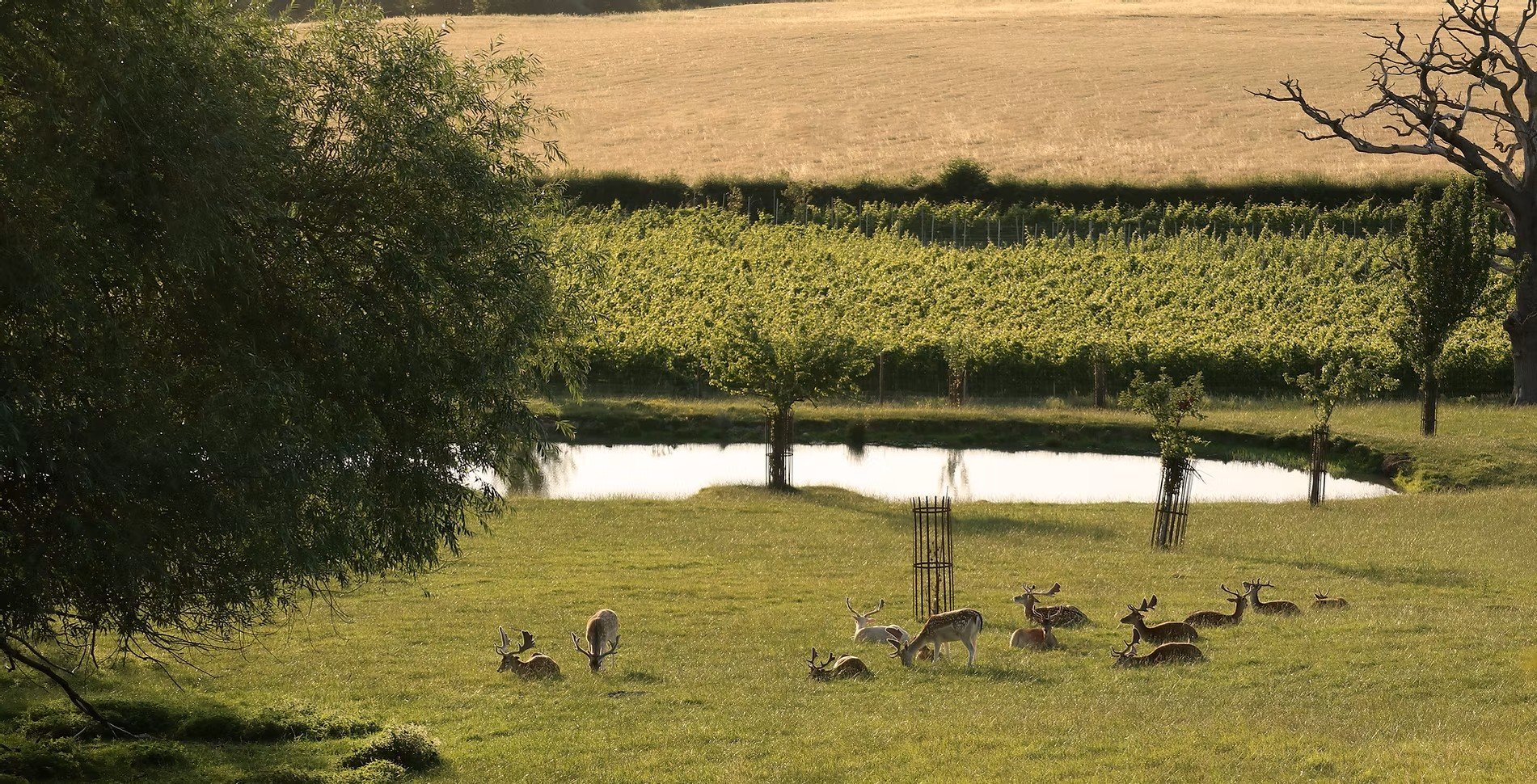
A vineyard on Bredon Hill, appropriately named Deer Park Wines
You only have to look across the channel and into the mainland, the Old World of wine where traditions stretch back millennia. Even here terroir teaches new lessons; even here modern science can still inform; even here you have malcontents anxious to disobey local laws and experiment with new plantings. For anyone saying an established region should rest on its laurels, the Super-Tuscans would like a word.
The still wines of Britain really stand on the cusp of something, and looking around, reading about it, visiting the vineyards, tasting the wines I cannot help but be reminded of another archipelago, the land of the long white cloud, New Zealand, where I worked in 2009.
New Zealand’s winemakers faced a lot of the same problems British aspirants are. A population whose drinking culture largely revolved around beer and the pub, a climate that was largely perceived as too cold to produce quality grapes, especially in the South Island, and a solution that involved the mass planting of our old friend Müller-Thurgau.
But then something happened, the country got its zeitgeist, a wine style that took the wine world by storm, arriving at the right time when consumers wanted something fresh, intensely aromatic and incredibly moreish to drink. Marlborough Sauvignon Blanc for a long time was the hottest ticket in world wine. In shops in the UK we would hide boxes of Cloudy Bay out the back to wait for the right customer to give a wink to, and they would buy all of your stock, if you let them.
Sauvignon Blanc was not a stranger (for example like Bacchus), it is a variety that was already world famous by the wines it made back in its homeland in the Loire Valley, like Sancerre. But Marlborough Sauvignon Blanc was completely different, pungent, vibrant and tropical, delivering flavours that were completely unknown in France to the point accusations of unnatural manipulations were made.
But the only things manipulating the grape were the soils, sunshine and sea breezes that nurtured Marlborough’s vineyards. Its terroir had coaxed a completely unique style from them that you cannot find elsewhere. Similar perhaps, but never the same.
And then it happened again, this time further south in Central Otago. And when I say further south I really mean it: when the first vineyards went in it was the most southerly winemaking region in the world, although more recent plantings in South America have taken its crown.
While planting grapes in Marlborough was seen as unwise, planting them in Central Otago was seen as insanity. The region has freezing winters, unseasonal frosts in spring and autumn, rainfall so low it is classified as a desert, baking hot summers during the day, and plunging temperatures at night.
All of which proved perfect for Pinot Noir.
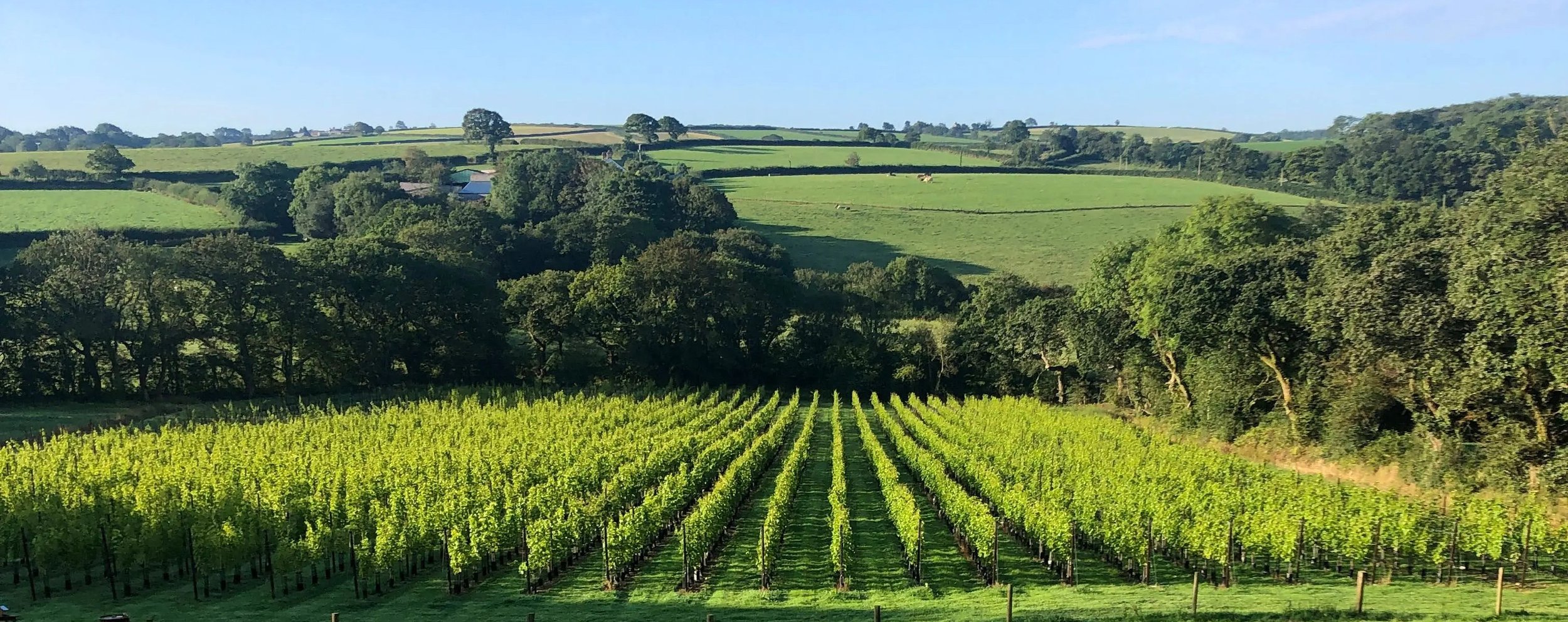
A vineyard in Pembrokeshire
The energy in the region when I was there in 2009 was evident. While a few experimental plantings had gone in before, the major commercial plantings started in the early 1990s before rapid expansion accelerated as the region’s wines found international success. Even by 2009 there was a sense that winemakers there were still finding their feet, and the vines were still very youthful.
You could make the argument that Britian has already found a similar zeitgeist in its sparkling wines. Without doubt this land can produce world-class fizz, with parts of the South-East enjoying the same Cretaceous chalk geology that nurtures the grapes of the Champagne region.
But it was a gradual revolution as the wines built up reputations against significant initial prejudice and concomitant industry inertia. But they are past that now, there are no gallic sniggers anymore when our sparkling wine are mentioned.
Now our still wines face that same challenge.
And they are certainly rising to it. Vineyard plantings have accelerated over the last three years and now we have over 1100 of them, and with it the country’s biggest ever harvest in 2025 (and one likely to be eclipsed by 2026). We need them: exports are booming chiefly driven by sparkling wine. Domestic sales are also on the march, with still wine doing particularly well.
This is in sharp contrast to the wider trend in the wine industry.
Wine tourism is also booming, with winery visits up by 55% in the last year providing a valuable boost to our rural economy. The popularity of the ‘cellar door’ allows wineries to sell directly to the customer, rather than via a merchant or retailer. These direct sales including wine sold through websites account for almost a third of total sales. Buy local remains a huge rallying cry.
The Search for Sacred Soils
A lot of early British vignerons were drawn to soils that mimicked Champagne’s famous chalk as closely as possible. And it has proved extremely effective: our sparkling wines are the proverbial golden goose. But there is a real sense that we are moving beyond that, into a second phase that goes beyond mimicry, a glorious experiment to harness our soils and terroirs to make wine that is all about us.
Now pioneers are looking further afield than the fizz powerhouses of Sussex, Kent and Hampshire. I am forever being asked, “Is that a vineyard?” Ascending the Sugar Loaf in Monmouthshire, touring the Isle of Wight, walking in Pembrokeshire and cycling around Bredon Hill at the edge of the Cotswolds have all recently been answered: yes.
These sites do not rely simply on serendipity, although it always plays a part. I remember asking the founder of Felton Road, Stuart Elms, how he chose the site of the eponymous Elms Vineyard, the heart of the estate and home to Blocks 3 and 5, the ‘Grand Crus’ of Central Otago.
“A helicopter,” came the answer, “and a clutch of maps.”
The maps in question charted topography, sunshine hours and ‘degree days’, which he explained was the number of days a year the site is over 10°C, the threshold for vine growth. Stuart had made his fortune growing blackcurrants and had decided to swap them for ‘something far less profitable’, said with a wicked little smile.
Down in the Southern Hemisphere Stuart was on the lookout for north-facing slopes; we up here, of course, look for the southerly opposite. Altitude is important in our cooler climate: above 125m can mean cooler temperatures and slower ripening, but nothing is off limits.
Shelter from the cooling south-westerly winds, in the form of trees or similar windbreaks, needs to be considered. Frost pockets should be avoided: unseasonal frosts are the enemy of winemakers worldwide, unless you want to be burning straw bales in the vineyards, or hovering helicopters over them.
There are, of course, many other factors, but the simple meat and potatoes of it boils down to sites that maximise warmth for the vines during their growing season, April until October.
And all of that without even mentioning soil yet.
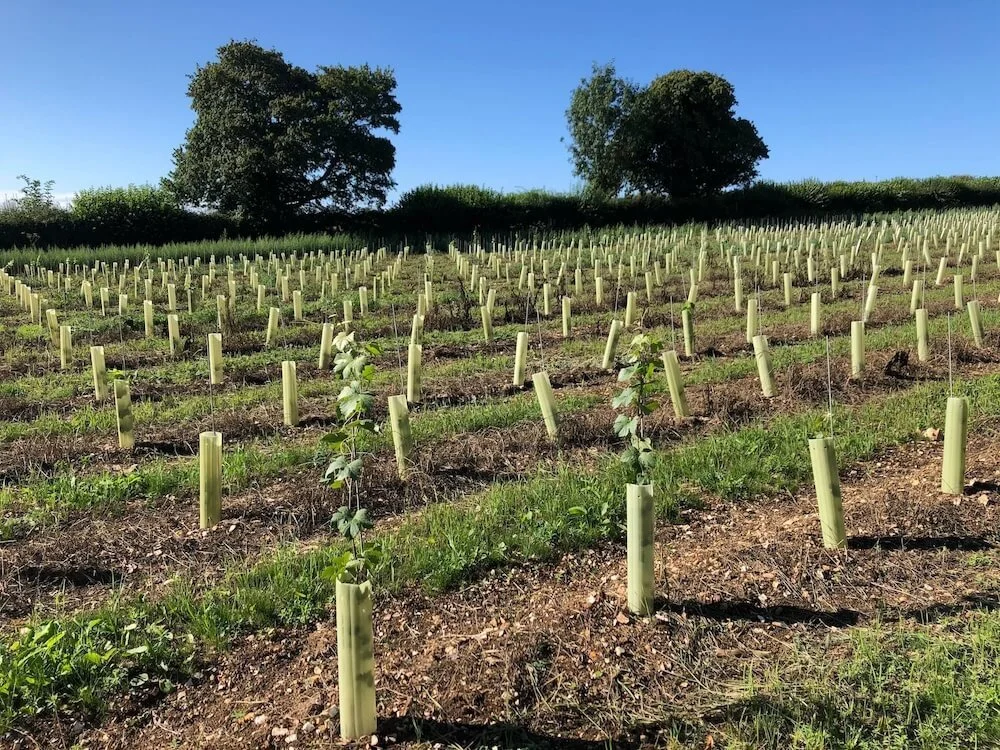
Young vines freshly planted
“Vines will grow on a wide range of soils (pH 5.5-8.5) and with the right treatments, pretty well any soil can be made to support vines. All vines are grown on rootstocks, and these can be tailored to cope with almost any type of soil.”
So says Stephen Skelton MW, veteran winemaker often called the ‘Godfather of English Wine’, and of course he is not wrong. He has forgotten more about winemaking than I will ever learn.
But of course, there is much nuance. It comes back to growing grapes as survival or expression. For survival you want a passable crop that is ripe at harvest. For expression you want a remarkable crop with as unique a character as possible.
You want the wine to interpret the terroir.
Terroir has always been a difficult concept to grasp. There is certainly no equivalent word for it in English. I remember travelling on the train everyday to Bristol and there was a undulating field on the way and high up I could see every part of it. In some the crop was dense and vigorous, in other the plants were much thinner, shorter with less foliage, and slower to ripen. The diversity was obvious from the train and fascinating to watch as the crop developed over time.
It struck this was an illustration of terroir at work, how tiny differences in microclimate make huge differences to the plants growing in them.
Of course that field was not just about the relationship between the plant and its immediate surroundings: it would not be there had not a human prepared the soil and decided to plant it there, and overwhelmingly my experiences on vineyards have demonstrated the human factor is significant.
At Felton Road they are always looking at processes and trying to find ways to remove the human factor from them as much as possible. But it does not prevent them using extendable propellers to clear away frosts, or ‘bird-scaring’ to chase off the waxeyes, or biodynamic treatments to aid vine growth.
Rootstock needs to be tailored to the soil, in the winter the vines need to be pruned and trellised, in the spring yields are reduced with a green harvest, in the summer canopy management is required. Throughout pests need to be controlled, dry periods need irrigation to ease hydric stress, and damper periods bring the threat of mildew and other fruit-destructive moulds.
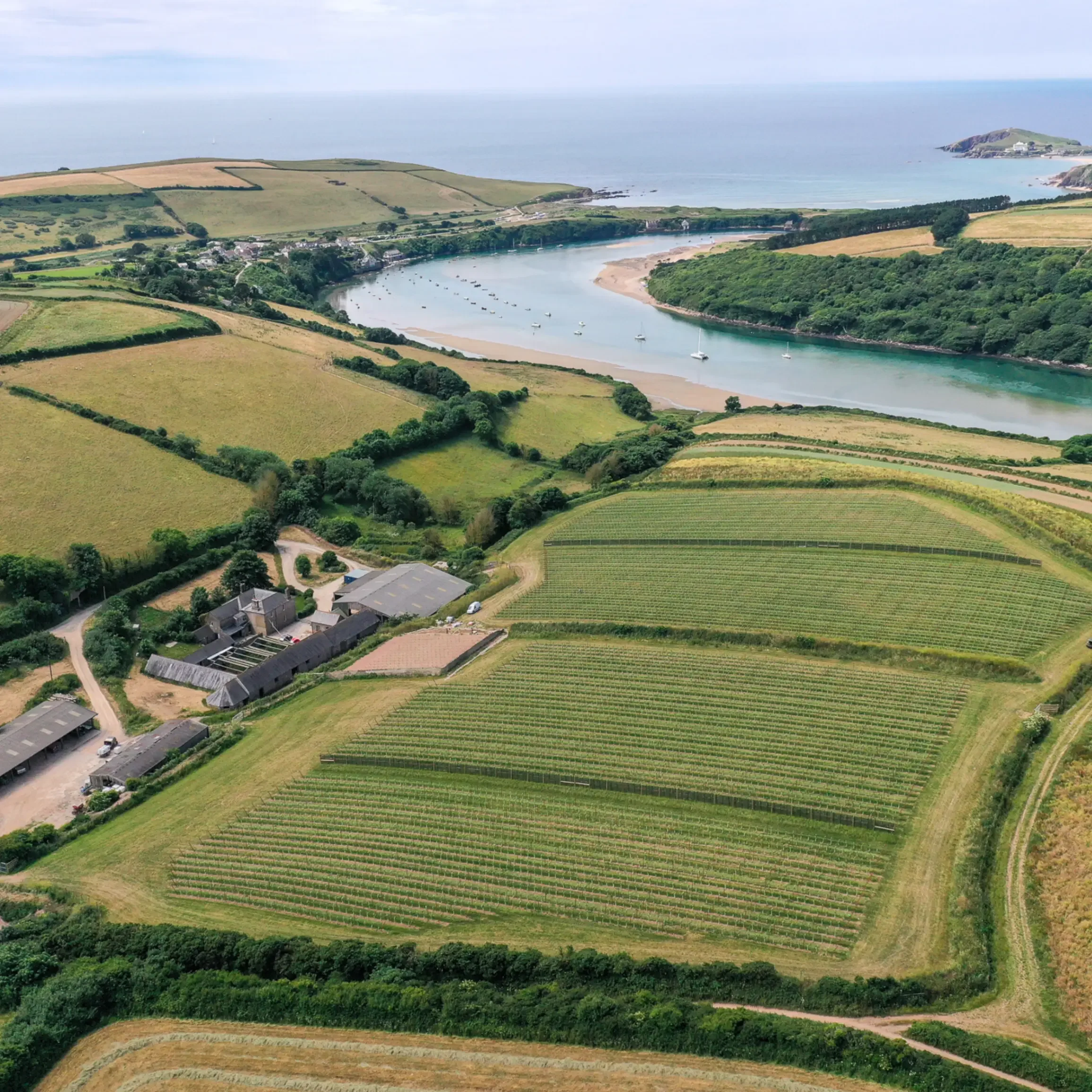
Bantham Vineyard, Devon
So where are Britain’s great terroirs, our sacred soils? That we are just beginning to find out, and it is already an exciting journey. Surely the chalk soils of the South Downs, part of the same ‘Paris Basin’ geological depression that nurtures Champagne’s grapes, are the first. To find others WineGB have designated several sub-regions. The sparkling powerhouses are covered by the South-East and Wessex regions and contain a whopping 73% of Britain’s vineyards.
To the north of them is the East region, covering the counties of East Anglia, the warmest and driest region of the UK and considered having a huge potential for viticulture. The Thames and Chilterns are next, centrally located but only with a handful of vineyards so far.
My own region is next, the West, stretching from the tip of Cornwall to the North of the Cotswolds. A warm, mostly maritime climate with an extraordinary diversity of terroirs. The same could be said of Wales, with its vineyards mostly clustered around Monmouthshire, but others popping up from Pembrokeshire to Anglesey.
These are broad strokes but a fine start at least. Outside of the well-established sparkling heartland there is still plenty of experimentation, exploration and identities to be forged. But let us not forget how broad French wine regions are: the North and South Rhône have little more in common than a few grape varieties: different soils, distinct terroirs, divergent cuisines and they support different rugby teams.
I wonder about the potential of the Cotswolds. It has already been home to one ‘wealth engine’, an ancient sheep breed introduced by the Romans that produced wool so special in the Middle Ages it was dubbed ‘the golden fleece’ and was the most highly prized in Europe during the Medieval wool boom. Something about the Jurassic limestone soil, the climate, the grasslands and the particular sheep breed, called the Cotswold Lion, combined to create it.
That is the magic of terroir right there.
There are several experiments to see whether lightning can strike twice. Best established are Woodchester Valley Wines nestled in one of the five valleys of Stroud. On Bredon Hill, an western outlier of the Cotswold scarp, are the 6000 vines of Deer Park Wines. I will watch that with interest as I would love to have a vineyard there and call it ‘Elephant Rock’, named for the landmark at the hill’s peak.
Further to the south is another interesting experiment, this time in the Forest of Dean. Kingsthorne’s vines were planted in 2017 and now, crafted by veteran winemaker Simon Day, the wines are really hitting their stride, evidenced by the glut of awards they won on release. Here renewal is at the heart of the operation: the vines share the land with wild flowers, meadows and old breed cattle to place sustainability at the centre of everything they do. More than that they are attempting to resurrect an 850-year-old vinous tradition, the monastic legacy of the abbey that still stands in the valley.
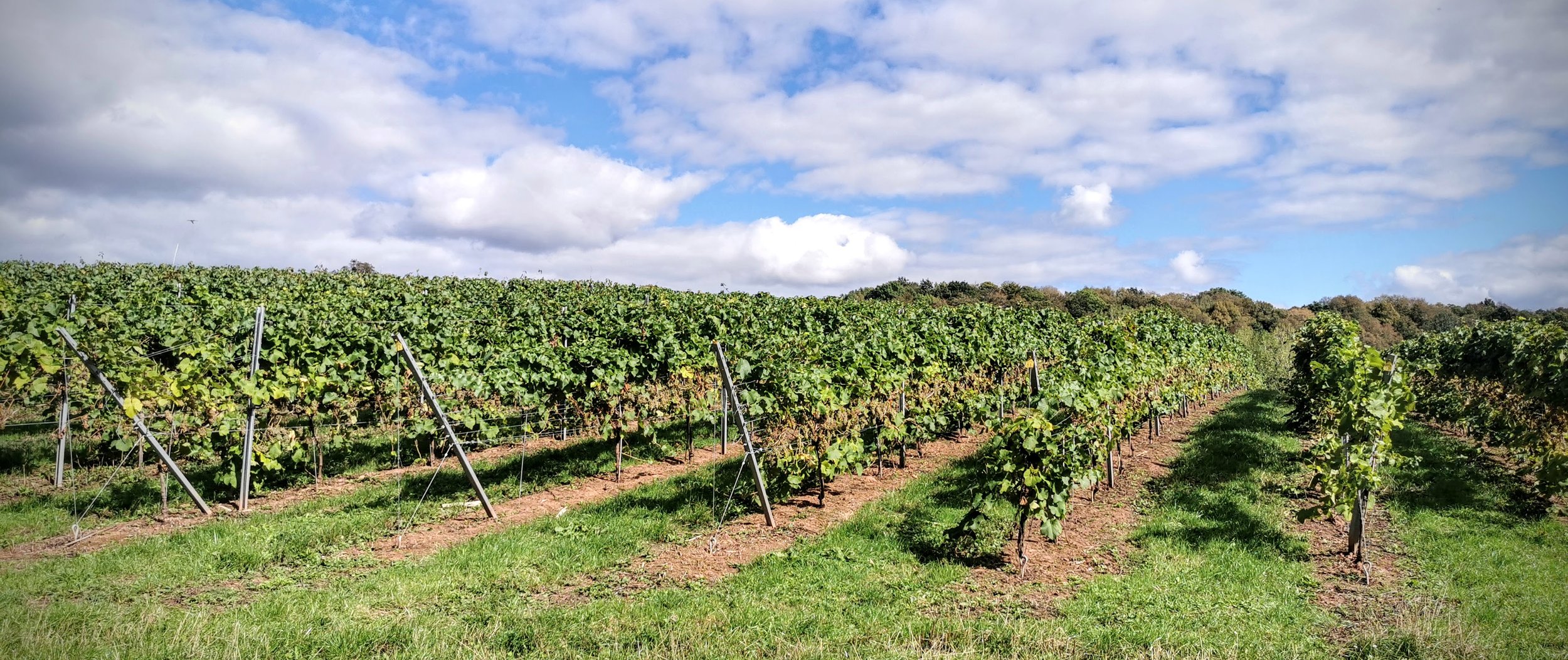
England’s Terra Rossa? The vineyards at Kingsthorne in the Forest of Dean
The soils are out there. Or perhaps I should say under there. And brave and pioneering people are looking for them, planting their vines and hoping that they can tap the magic held within both. It may take a long time: our sparkling wines were no overnight success. But as climates shift and with the fruit better at every harvest, something may just click, and a region and wine style emerge that proves irresistible, grabbing the world’s attention with a still wine that is unmistakably British.
And if it happens watch the gold rush begin. In 1990 there were 6 wineries in Central Otago. By 2004 there were 75. From a hundred hectares of vines at the start to the thousands there are today.
With the flourishing of our sparkling wines we have shifted from a novelty to an established and respected industry that now simply shouts about its unlimited potential. The hunt is on, amongst our rolling green hills and hidden valleys, to find out just how good British wines can become.
Written by A. James Cole