The Curious Tale of Henry Ford, the Cotswolds and a Lost Ballroom
The link between Henry Ford, pioneering American industrialist and powerful business magnate, and a rural Cotswold idyll may not be one that is immediately apparent.
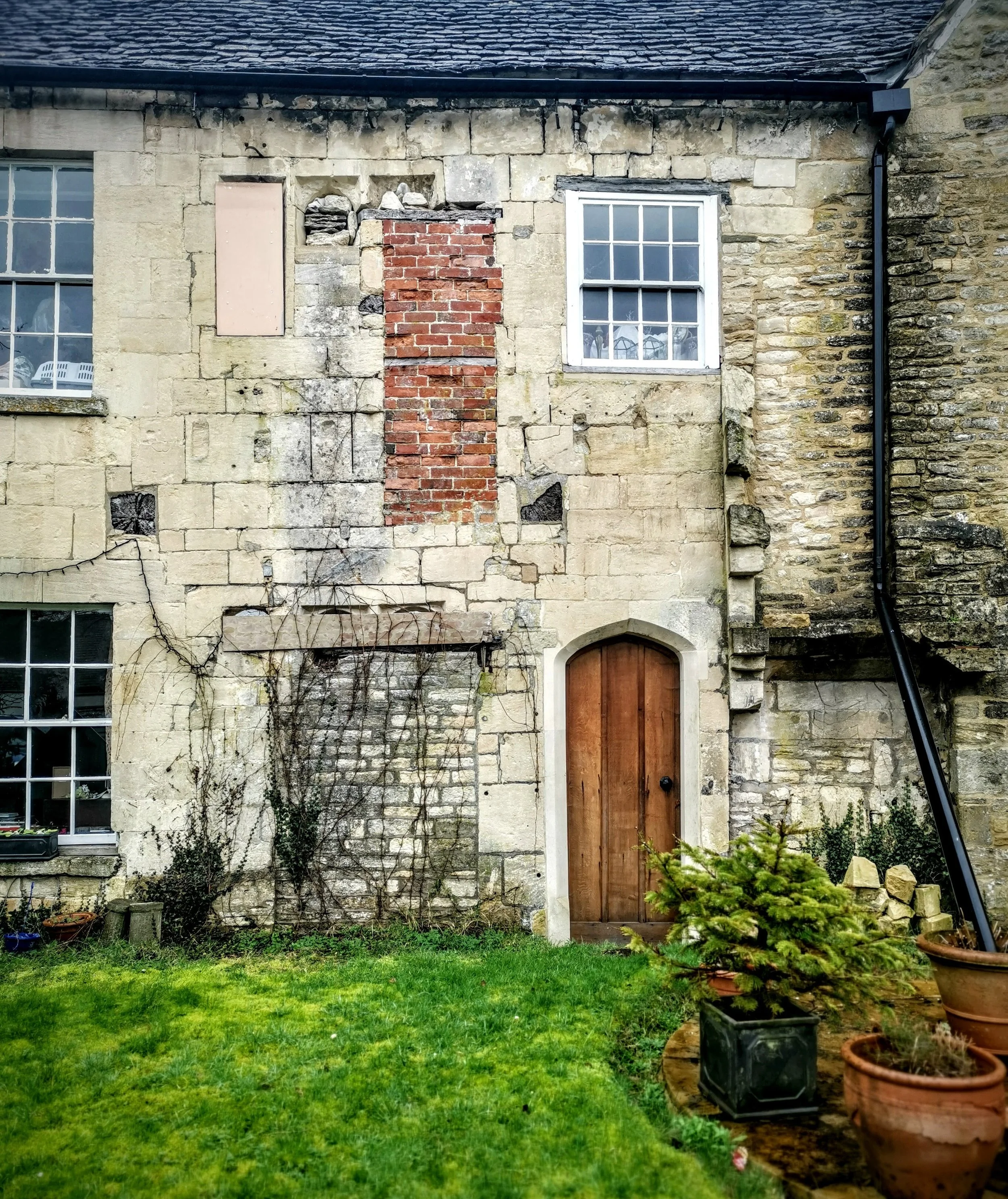
I found it when I posted a picture of this puzzling facade in Northleach above to my subreddit. From there a fascinating story quickly emerged.
The relationship between Henry Ford and the Cotswolds began in 1920 when he and his wife Clara visited the region. They like so many do fell in love with its rolling hills and hidden valleys, and the beautiful villages that nestle within its landscape so perfectly.
Unlike many others he was not content with just some photographs, a embossed leather bookmark or branded umbrella as a keepsake.
No, Henry Ford’s ambition was a little grander than that.
He had made of point of visiting the region everytime he came to England and was fascinated with the buildings that seemed to blossom so organically from the verdant hills. By 1929 he had decided that he wanted one for himself. In a letter the brief was a laid out: Henry wanted a house in “an old style that has not had too many changes made to it that could be restored to its true type” and “possessing as many pretty local features as might be found.”
Herbert Morton, Ford’s English agent, set to work.
It was not to prove a straightforward task. Cottages that matched Henry’s demands were rarely on sale, and the owners of ones that did proved intractable when approached.
Then Morton got lucky. Driving through the village of Lower Chedworth he saw the cottage Henry was after, having “a nice doorway, mullions to the windows, and age mellowed drip-stones.” It was too late in the day to knock on the door, so Morton returned to Cheltenham, where he was staying that night.
Taking a morning constitutional the next day, Morton happened to glance in the window of a local estate agent and lo and behold staring back at him was a picture of the very cottage he had spied the evening before, offered for sale.
Such serendipity saw Morton purchase the 17th century Rose Cottage for £5000 under his own name (mention of Henry Ford would have surely inflated the price) and the 2 acres of land that went with it. However Henry was not fully satisfied and proceed to make some ‘improvements’ he felt truly encapsulated the Cotswold aesthetic, adding a bay window, a porch and a beehive oven, amongst other things.
He then proceeded to do one of the most American things and dismantled it brick by brick before shipping it, along with specialist builders from Gloucestershire to Dearborn in Michigan, to be rebuilt there.
It was not without controversy: locals were outraged when they learnt of the deception. The cottage had been occupied for 300 years, sold in good faith and now uprooted and relocated across the sea when there was a local housing shortage. A rather extreme version of gentrification: at least local pressure prevented Ford doing the same with Bibury’s famous Arlington Row.
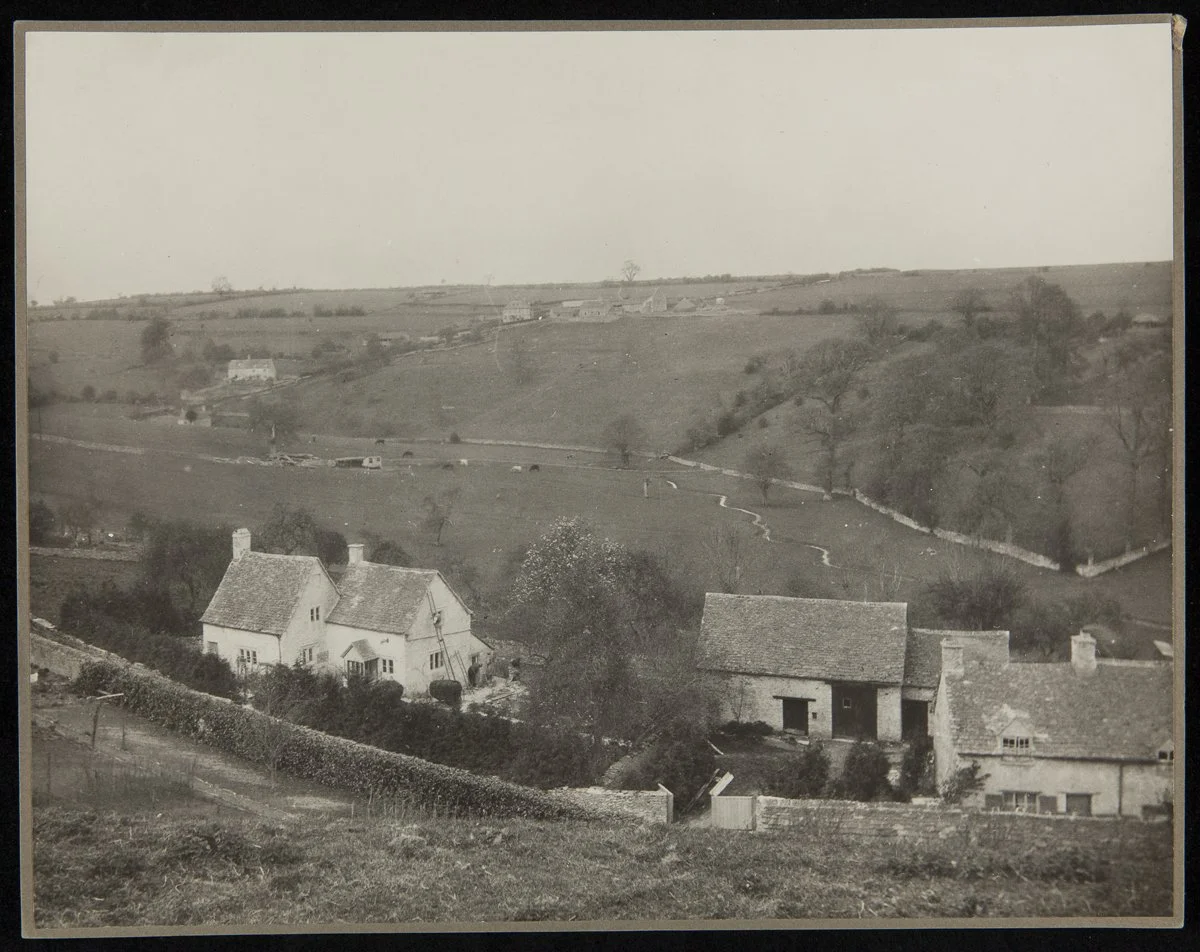
Rose Cottage in situ in Chedworth.
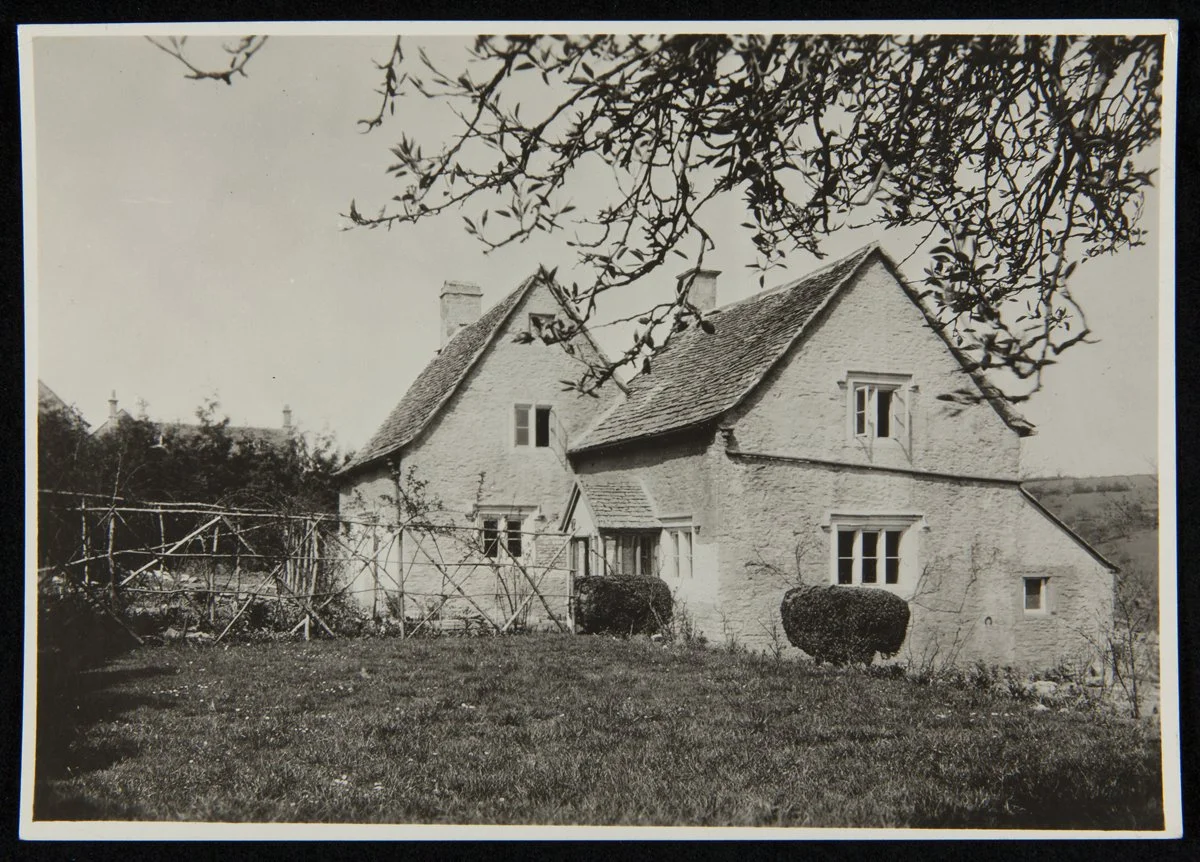
The cottage as Herbert Morton first saw it.
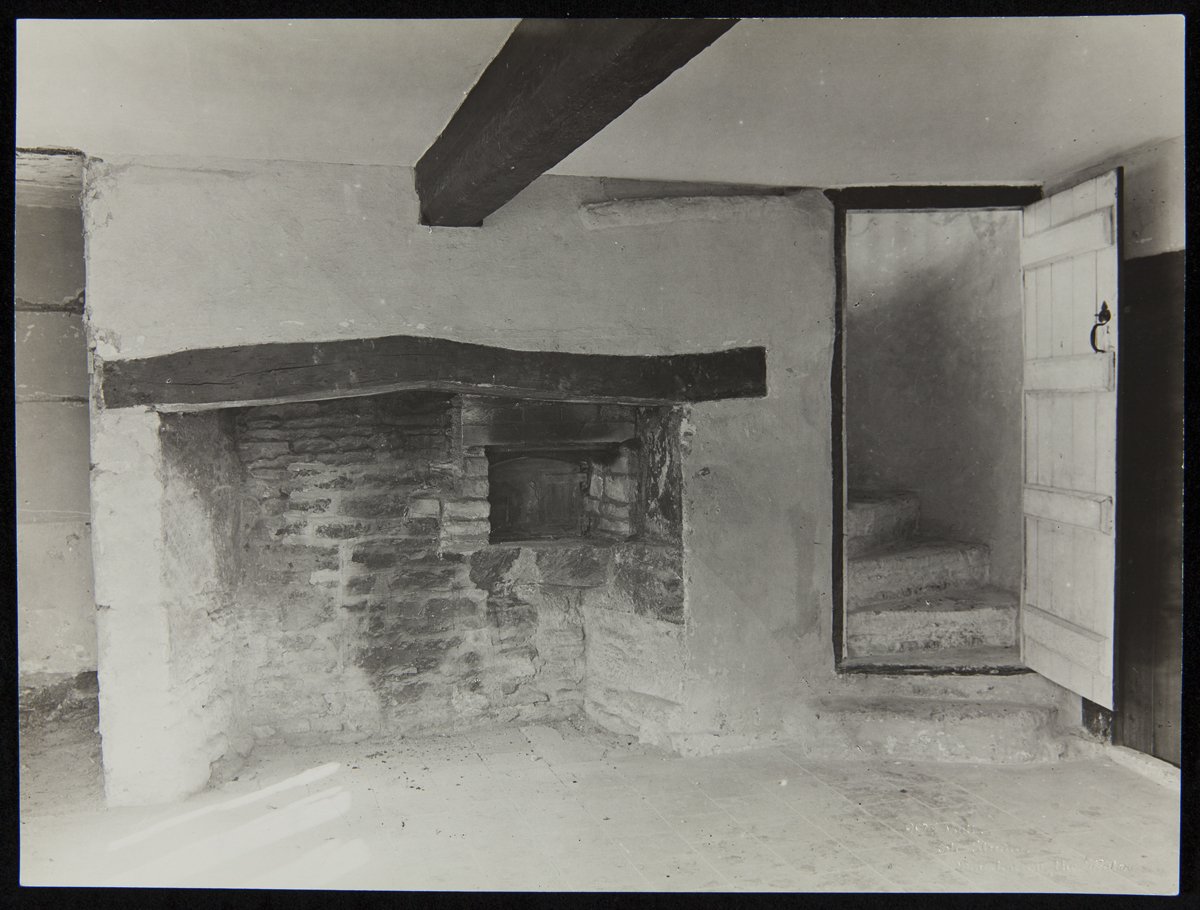
The 'local charm' Henry Ford was after.
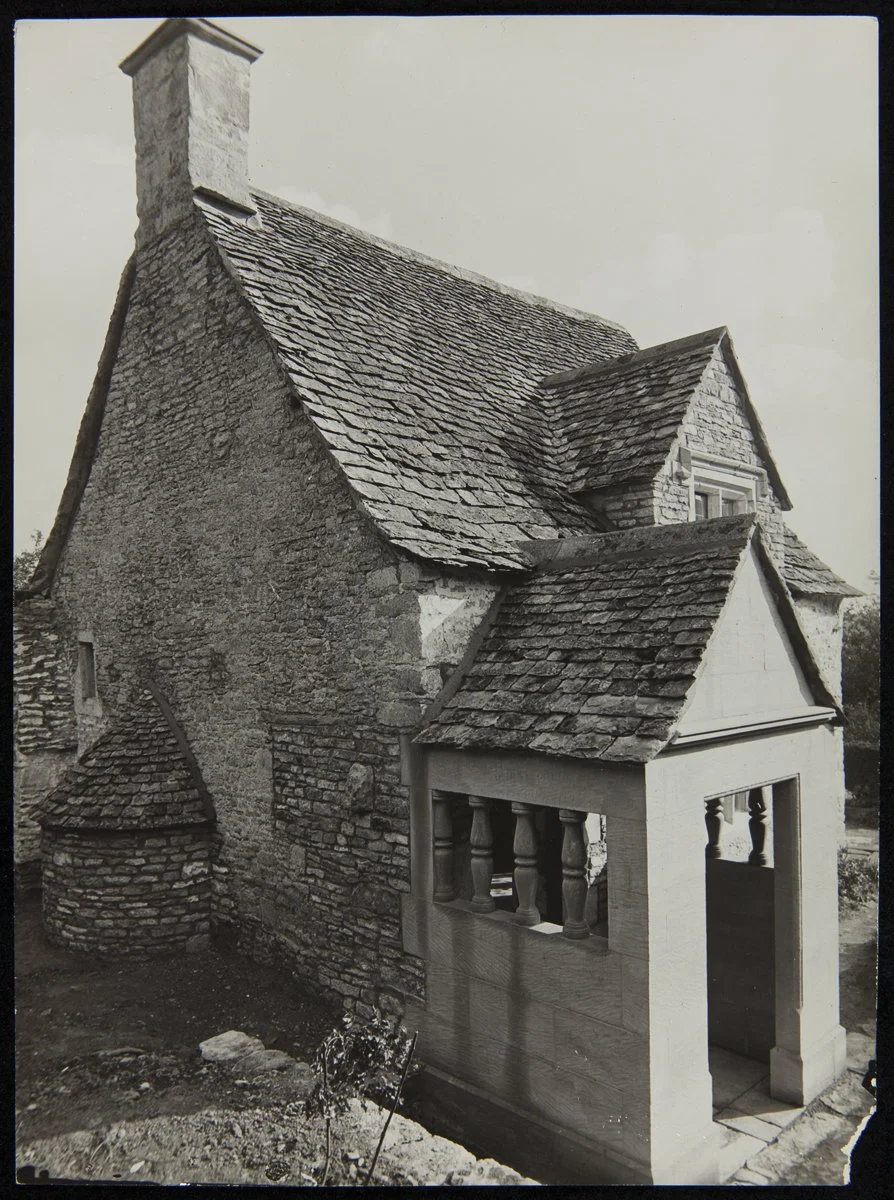
And some added charm: the addition of a porch.
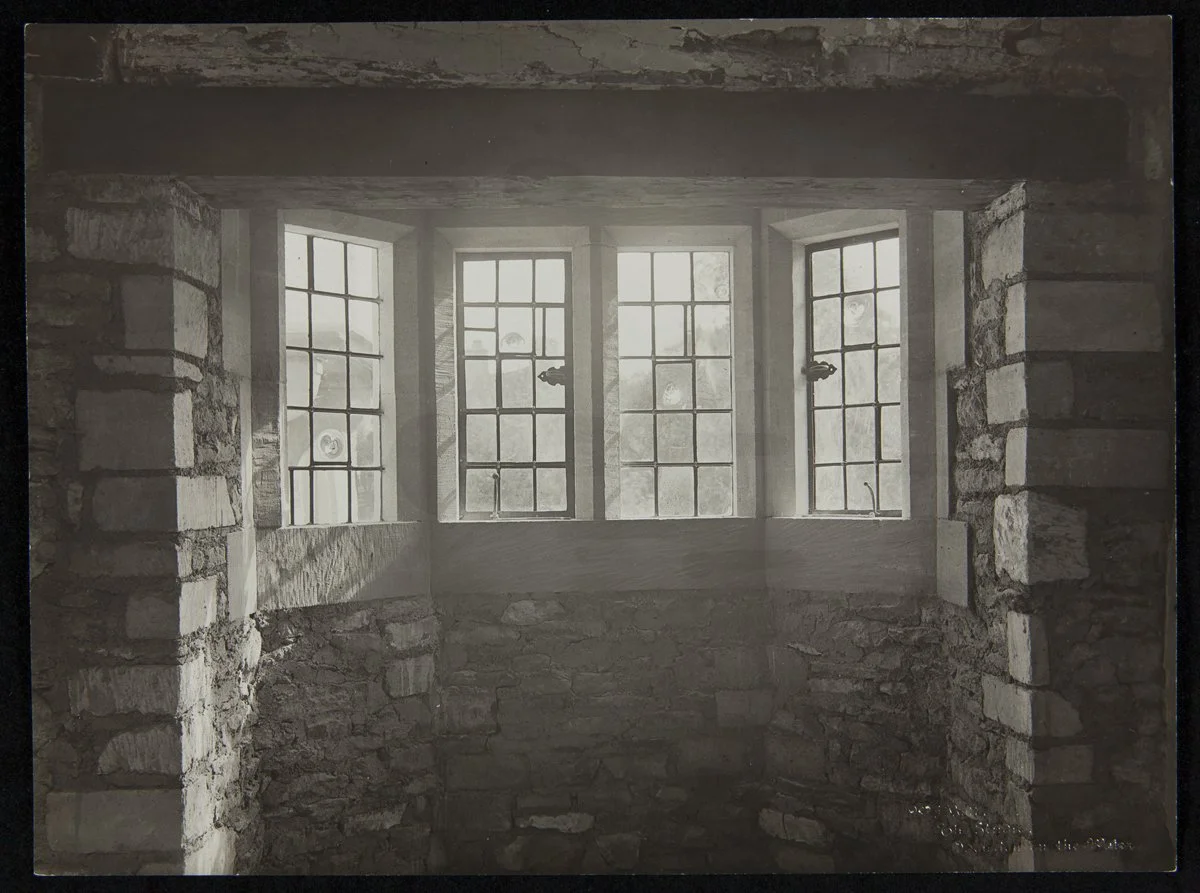
And a bay window.
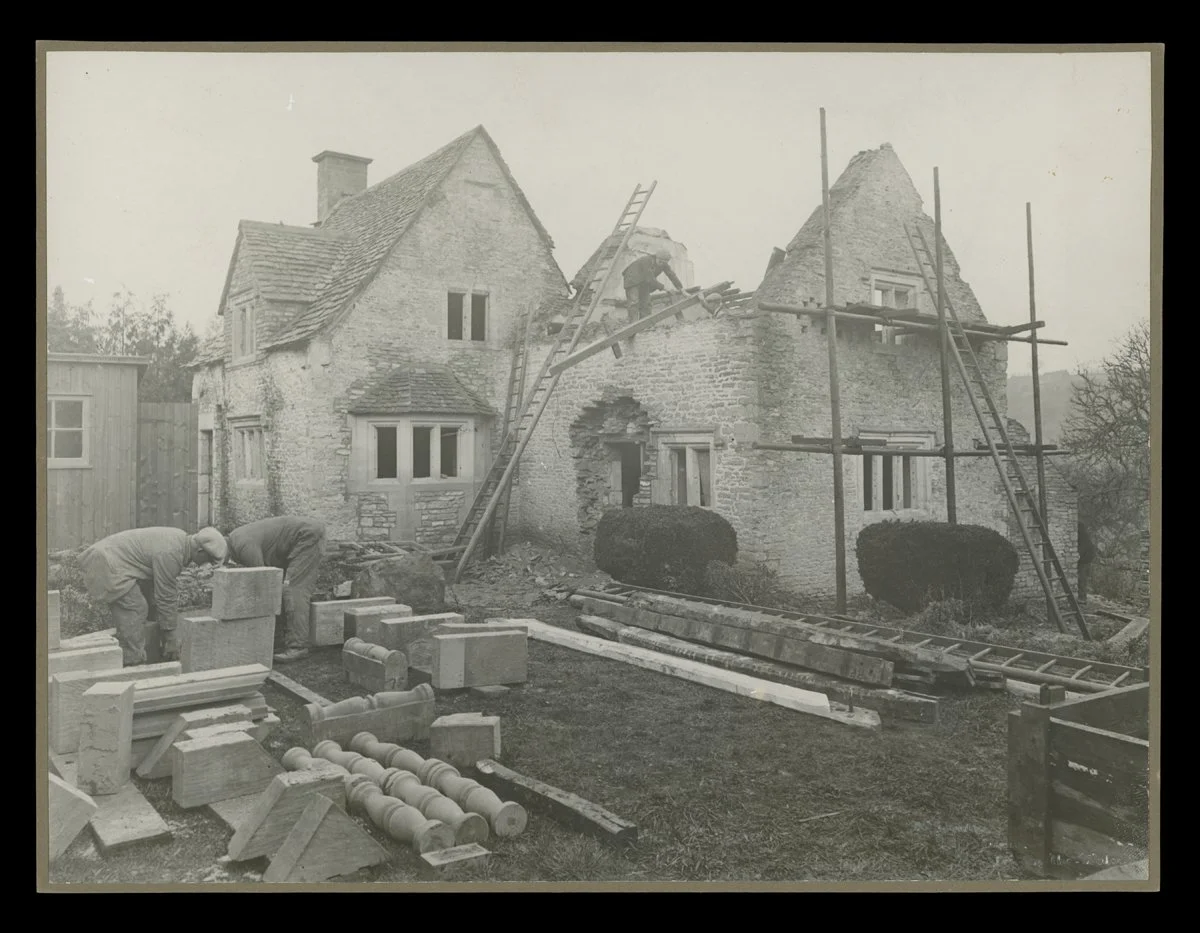
Work began deconstructing the house before shipping to Michigan.
A Cottage Reborn
Doors, windows, staircases and other features were packed in 211 crates, and the Cotswold stones into 506 burlap sacks. The barn, stable and even the fence went with them, at first via a huge train made up of 67 carriages to Brentford, then by sea to New Jersey.
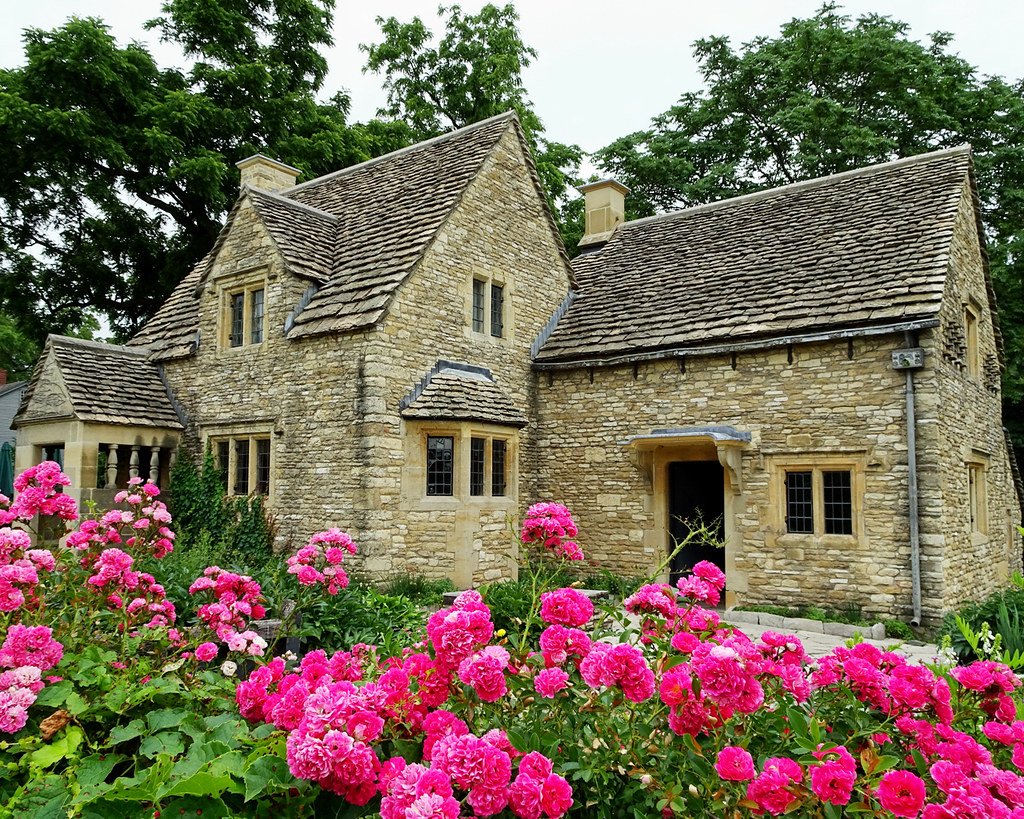
It then completed the journey overland to Dearborn, where it was rebuilt by Cotswolds stonemason Tom Troughton and carpenter William H. Ratcliffe, with labour provided by Ford’s factory workers.
The process lasted around 3 months, and when it was complete Henry’s wife Clara treated the craftsmen to a fine lunch prepared in the beehive oven, and a two week trip including a visit to see Niagara Falls. ]
Ford completed his life-sized Cotswolds diarama with a old forge from Snowshill, as well as a flock of our local Cotswold Lions sheep and even a matching sheep-dog.
And there the ‘artifact’ remains still, an ancient corner of rural England first built in 1619 now standing in modern Michigan, visited by thousands and with a long waiting list to enjoy some afternoon tea served in its garden.
The Lost Ballroom
But, I hear you cry, what of that strange wall in Northleach I came here to read about!
That is the facade of Dover House towards the north end of the town. Also called the Great House it was built in the 17th Century under the instruction of William Dutton, Lord of the Manor of Sherbourne.
It included at one point a ballroom, and serendipity struck again for Henry Ford when that bay of the house was threatened by a road-widening project. He purchased it in 1937 and in true Henry Ford-style dismantled it and bought it brick by brick to the United States.
However unlike Rose Cottage its ultimate fate is much harder to ascertain. It does not appear to have been rebuilt in Henry’s Dearborn museum, his ‘Greenfield Village’, to join other curiosities like the Wright Brother’s workshops and Thomas Edison’s laboratory.
The relocation of Rose Cottage was meticulously recorded and photographed, with detailed paperwork and shipping manifests.
Any trace of the Northleach ballroom quickly runs cold. Correspondence and local survey documents for the road-widening projects are held within Gloucestershire County archives, and I have been told there are purchase records and agent logs pertaining to it within the Henry Ford Archive, but thatis where the papertrail ends. Where are the files, and where is the ballroom?
The outbreak of war in Europe may have almost certainly played a part, although the purchase did precede this by two years. The missing bays of Dover House were certainly removed but their ultimate fate is a mystery. Did they even leave our shores?
I suspect this small ballroom and lost piece of Cotswold history is in a forgotten warehouse, either here or in the U.S., still in its numerous numbered burlap sacks, slowly gathering dust.
But the scars of its removal remain: bricked up doorways, unseeing windows and traces of the old retaining walls, testament to this strange story of the Cotswolds and the mighty Henry Ford.
By A James Cole
P.S. I have submitted a formal enquiry to the Henry Ford archives regard the missing ballroom, will update if nd when I find anything else out.
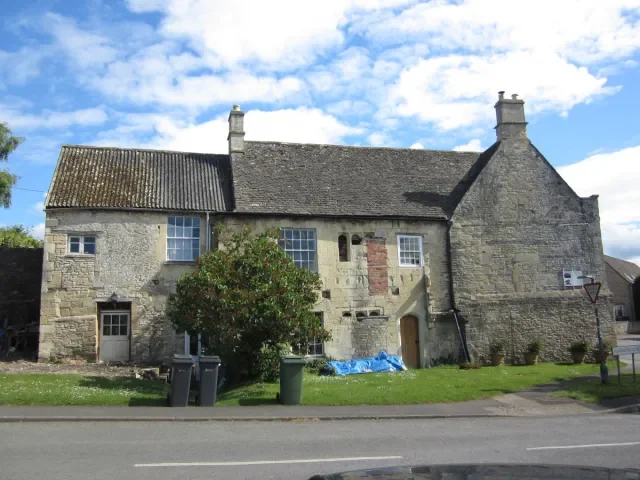
Dover House in Northleach
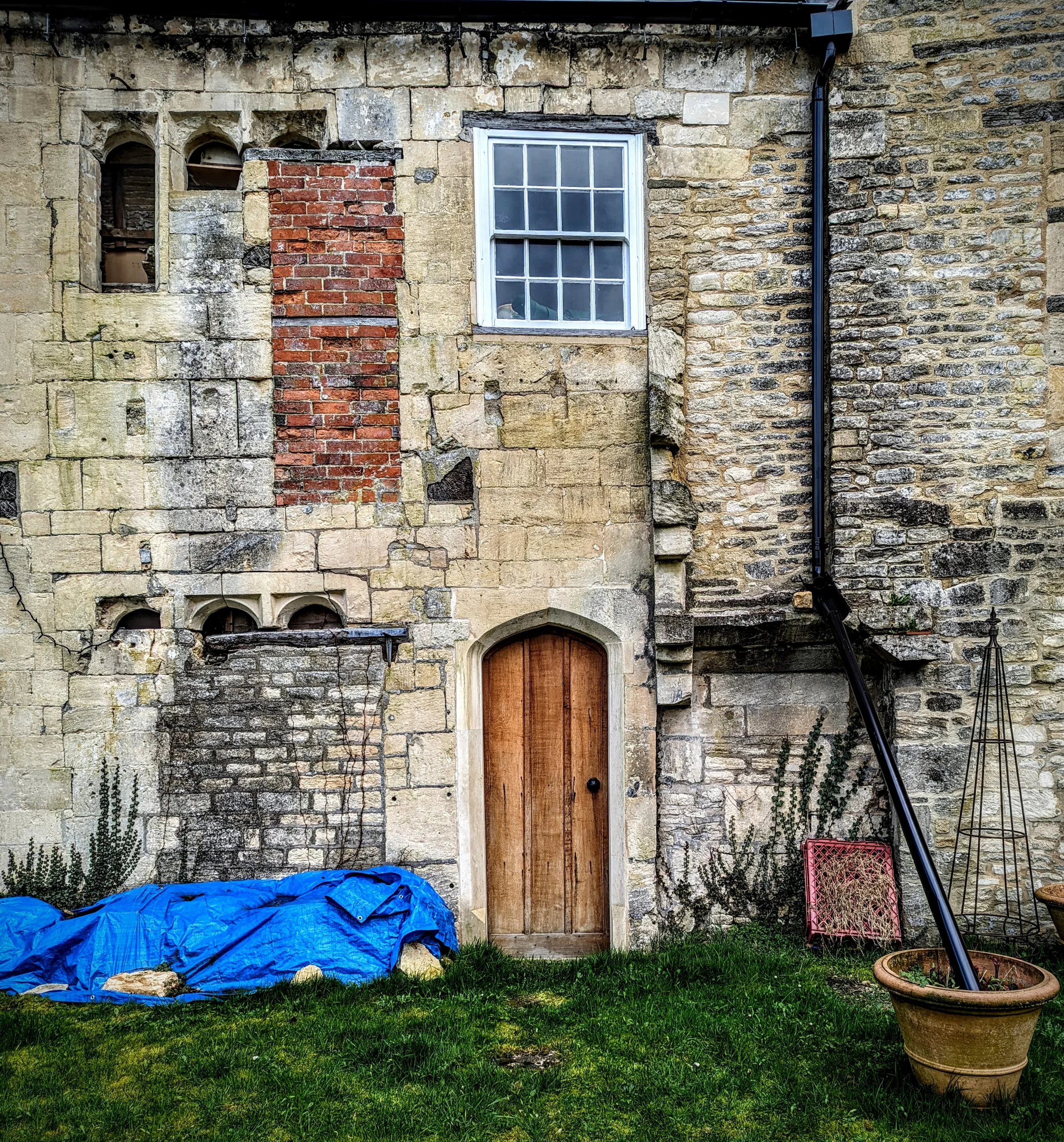
The scars from the removal of the ballroom remain today. Dover House, Northleach